Pixy G.R.I.N. — Great Residential Interiors Network
All styles
Architectural Contemporary signature interior

Designed for how we live in Delhi NCR

Architectural Contemporary

Bold, structured, statement-led.

Some homes want to announce themselves. Not loudly — not through colour or ornamentation — but through the quality of the space itself. The way a concrete ceiling meets a flush wall. The way light falls across a microcement surface at four in the afternoon. The way a monolithic kitchen island reads as a single object rather than a collection of units.

Architectural Contemporary is the design language for households who find beauty in structure, precision, and material honesty. It is not minimalism — it has more presence than that. It is not industrial — it is too refined. It sits in the space where architecture and interior design are the same discipline.

A closer look

Inside the aesthetic

Bold, structured, statement-led. Fluid layouts, sharp lines, and high-end tactile surfaces engineered for daily life.

The vibe

This aesthetic rewards attention to detail because it contains very little decoration. Every surface, every junction, every light fitting is visible and intentional. Nothing hides behind objects or textiles. The quality of execution is the quality of the room.

The design language
Colour palette
Charcoal, warm grey, off-white, and black. An occasional warm tone — a terracotta accent wall, a warm timber insert — to prevent the palette from reading as cold. The palette is restrained because the surfaces and structure do the work.
Materials
Microcement on floors, walls, and ceilings — seamless, textural, architectural. Liquid metal accent panels that read as bespoke art. Architectural cove lighting integrated into the ceiling plane. Monolithic kitchen and bar islands in solid stone or concrete. Charcoal-led palette throughout.
Lighting as architecture
Lighting is structural rather than decorative. Cove lighting defines ceiling planes. Recessed floor lighting traces the boundary between materials. A single pendant over a dining table is chosen for its form, not its warmth. The light sources are often invisible; only the light itself is seen.
Junctions and details
The quality of this aesthetic is most visible in the details. Where wall meets ceiling. Where floor material changes. Where a door sits flush with the wall plane. These junctions are either invisible — hidden behind recessed reveals — or made into deliberate design moments.

The everyday reality

The common concern about Architectural Contemporary is maintenance. Microcement scratches. Concrete stains. Liquid metal panels need careful cleaning.

All of this is true of the versions specified without care. The materials we specify for daily life in Delhi NCR — with children, with dust, with the full range of the city's climate — are engineered for durability. Microcement is sealed with a penetrating sealer that resists staining and can be resealed in a day. Liquid metal finishes are lacquered over a prepared substrate, not raw metal on plaster. The aesthetic holds up because the specification is honest about what it needs to withstand.

How to recognise it
  • Walls, floors, or ceiling in microcement or a seamless material
  • Recessed or concealed lighting — coves, floor channels, integrated shelf lighting
  • A monolithic kitchen — island and cabinetry reading as single objects rather than a collection of units
  • A liquid metal, raw steel, or polished concrete accent in the main living area
  • A charcoal-led palette with no bright colours

Room-by-room

Architectural Contemporary across every space

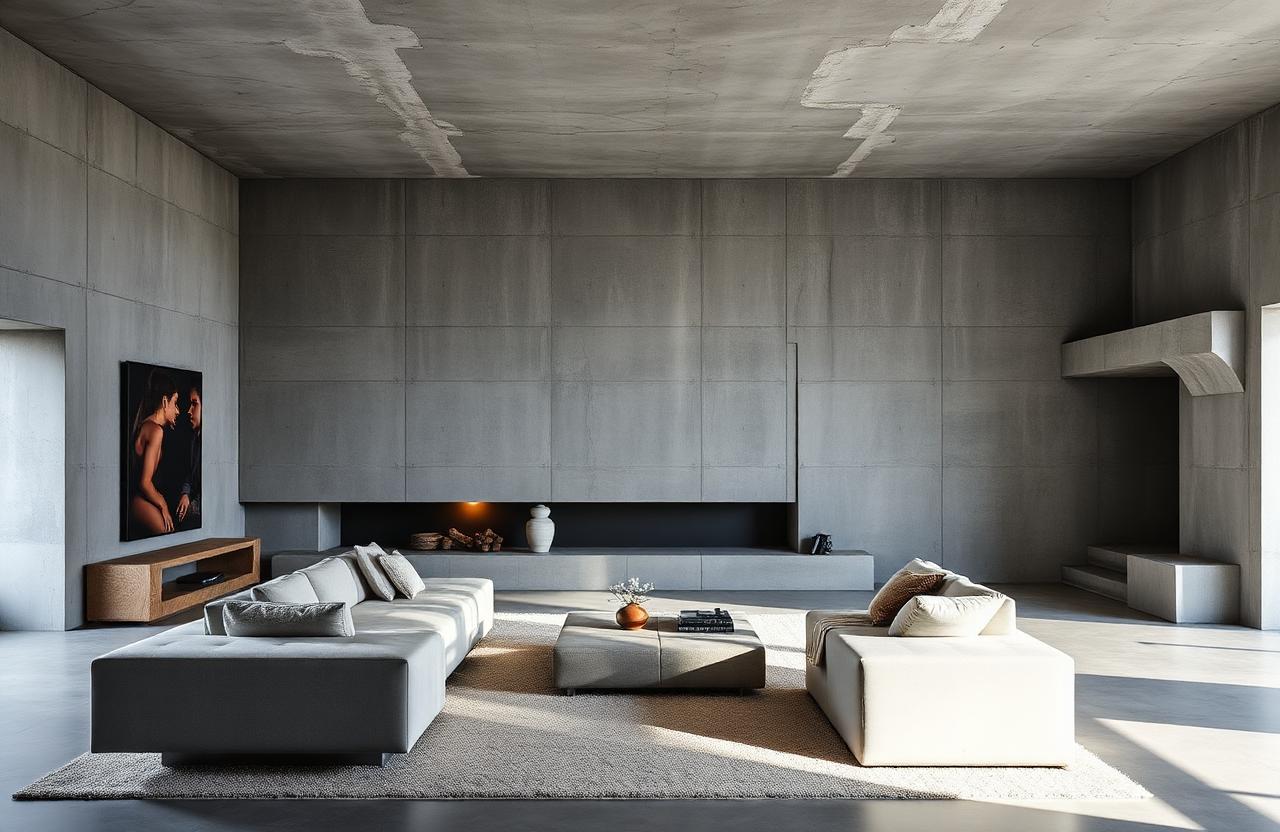
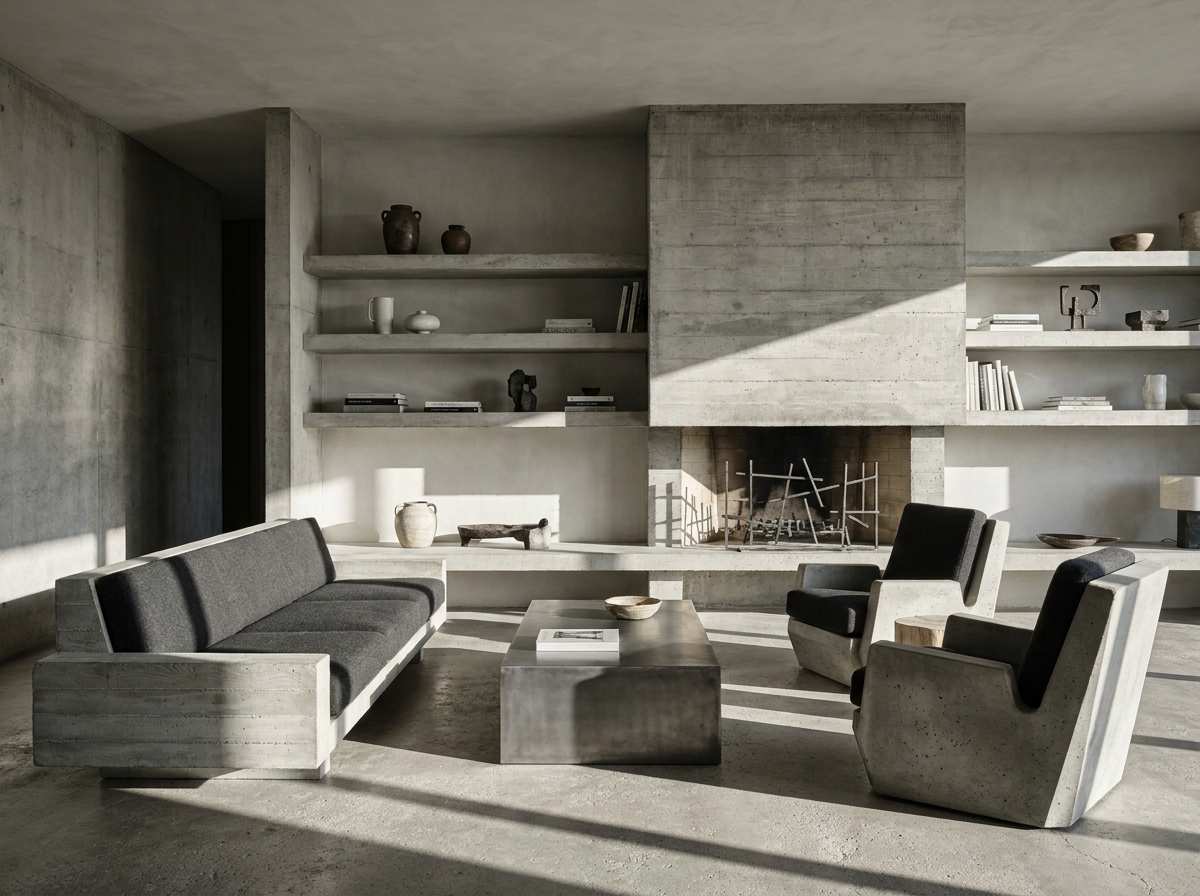
Architectural Contemporary living room in an Indian home

01 · Room

Living Room

Organised around structure rather than furniture. The sofa is large and low — a charcoal or warm grey modular in performance fabric. The coffee table is a single slab of stone or concrete on a steel base. The media wall is recessed flush into the wall plane, with no visible cables and no frame around the screen. One accent — a liquid metal panel, a single large canvas, a sculptural light fitting — provides the focal point.

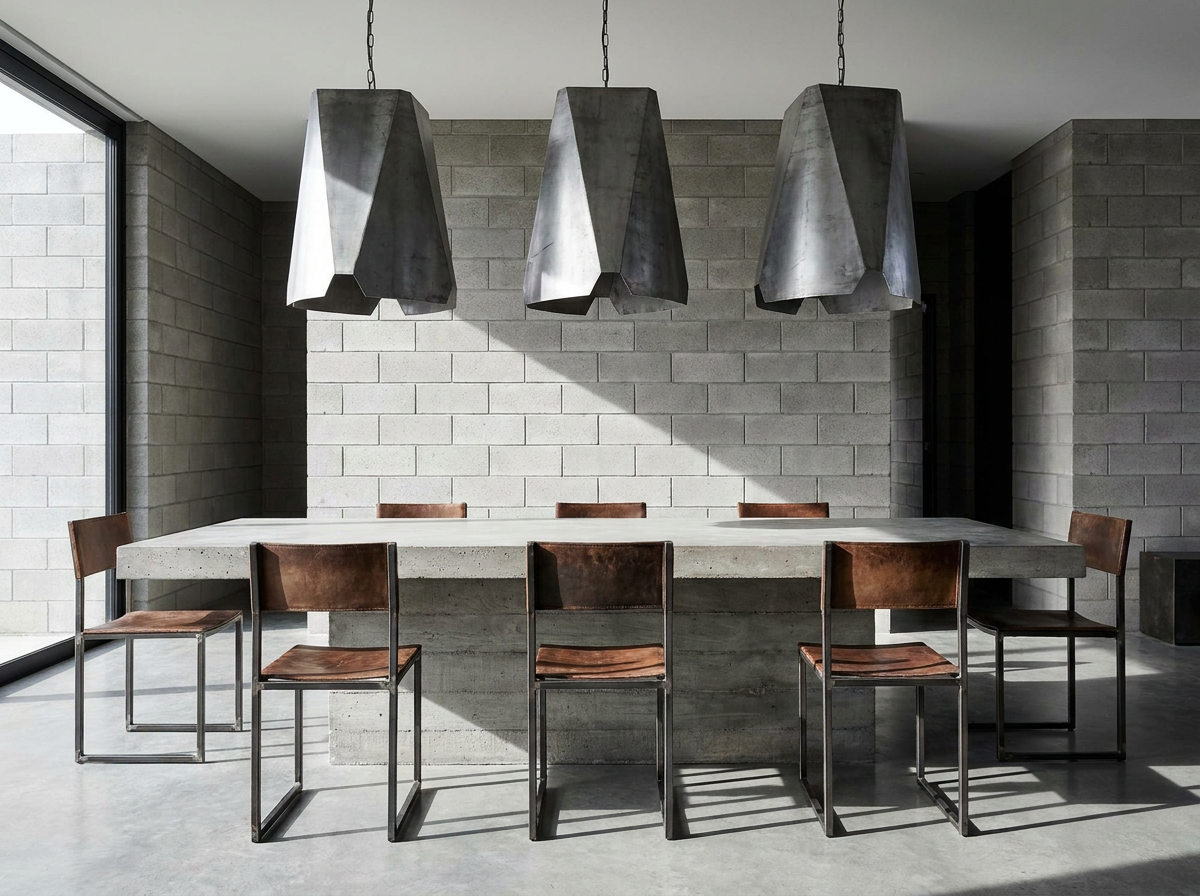
Architectural Contemporary dining room in an Indian home

02 · Room

Dining Room

A monolithic dining table — a single slab of stone or concrete on minimal legs — is the centrepiece. Chairs are upholstered in charcoal leather or performance fabric, clean-lined, without ornamentation. The pendant overhead is the room's single decorative object: a sculptural form in metal or blown glass. No sideboard, no display, no art on the dining room walls. The architecture is sufficient.

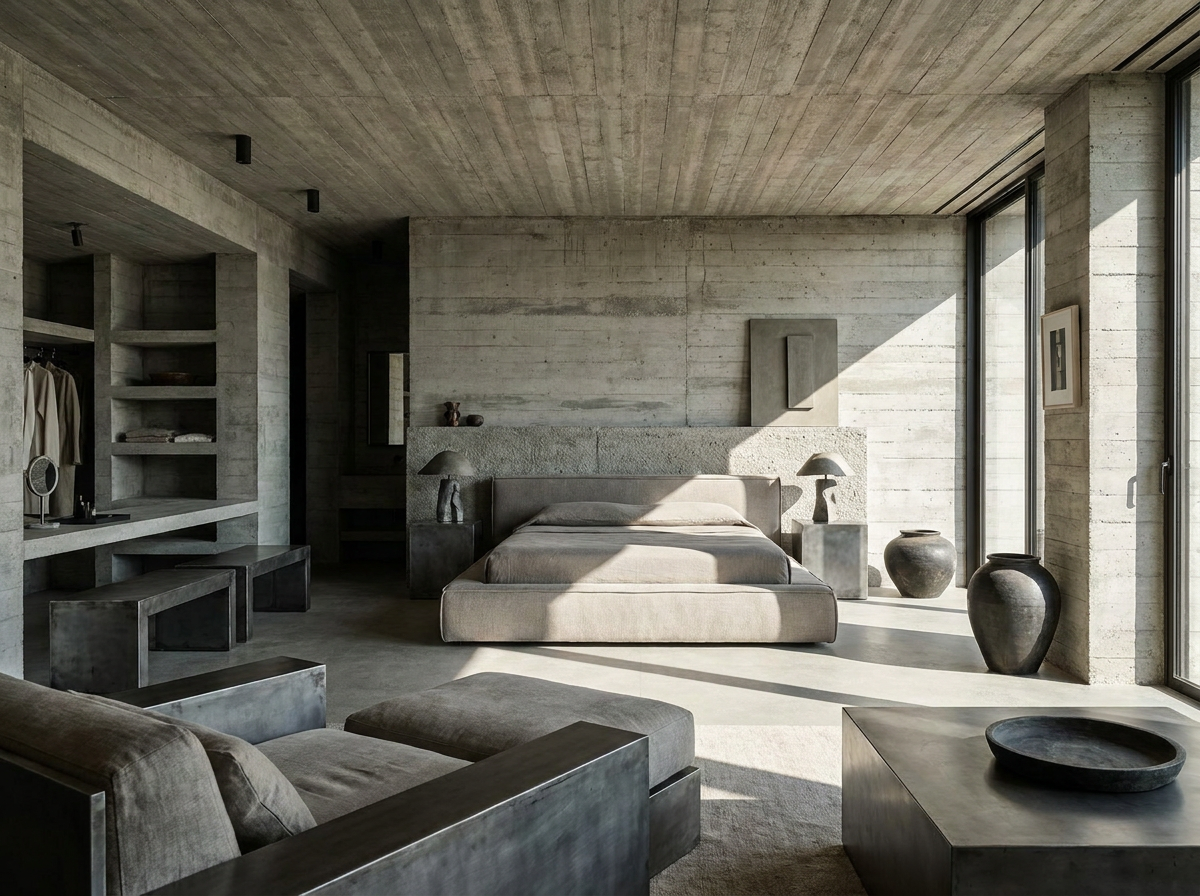
Architectural Contemporary master bedroom in an Indian home

03 · Room

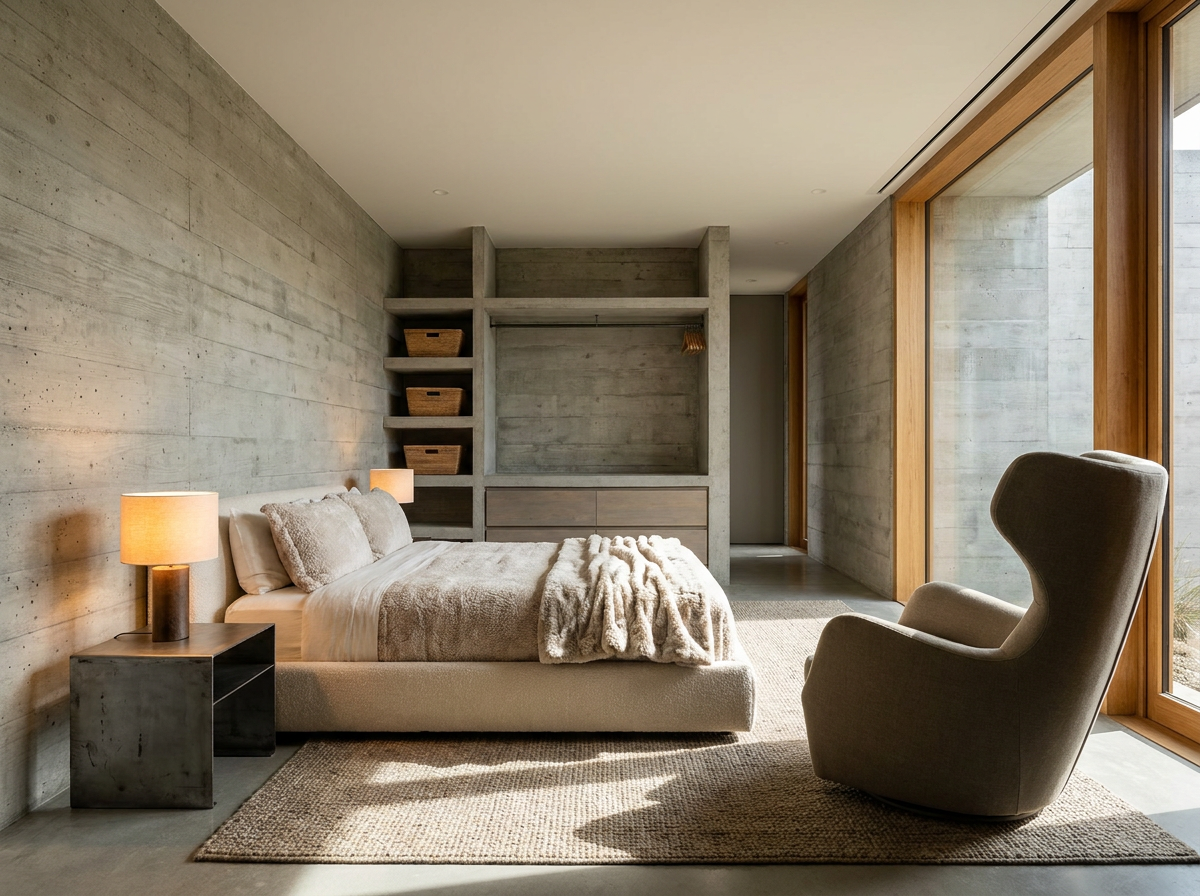
Master Bedroom

A platform bed built directly into a microcement or timber base. A recessed headboard niche with integrated lighting. Floor-to-ceiling wardrobe panels in matte charcoal or warm timber that disappear into the wall plane. No bedside tables — instead, cantilevered stone or timber shelves at the correct height. The precision of the design is most felt at a daily level here.

Architectural Contemporary kids room in an Indian home

04 · Room

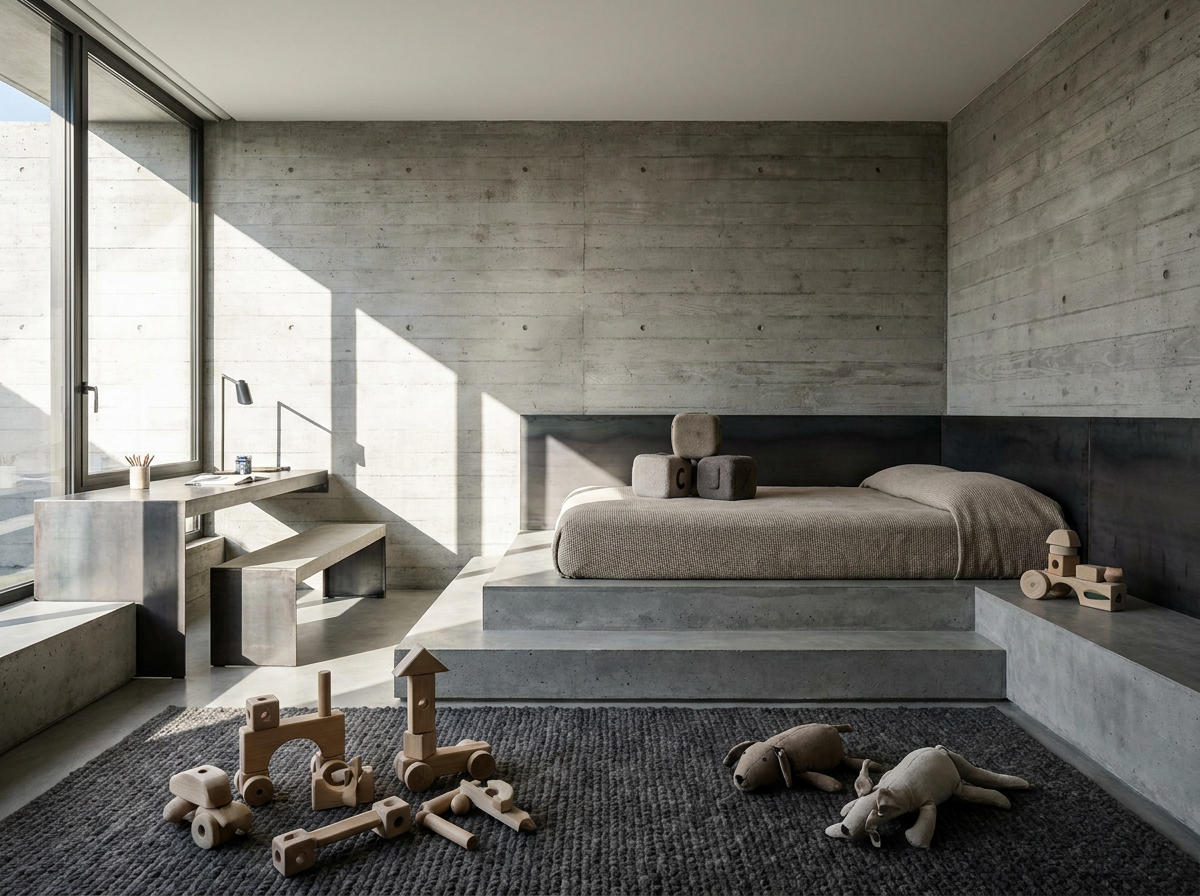
Kids Room

Architecture adapts through colour rather than material change. The structure and material palette stay — microcement or timber floors, flush built-in storage — but a single accent colour is introduced in the upholstery, the rug, or the wall of the built-in bookshelf. The room grows with the child.

Architectural Contemporary parents room in an Indian home

05 · Room

Parents Room

Warmth introduced without abandoning the structural palette. Warm timber inserts in the wardrobe panels. A textured linen bedspread. A single pendant in brass or warm bronze rather than the cooler metal finishes used elsewhere. The room is quieter and warmer than the main living spaces, which is appropriate to its function.

Architectural Contemporary study room in an Indian home

06 · Room

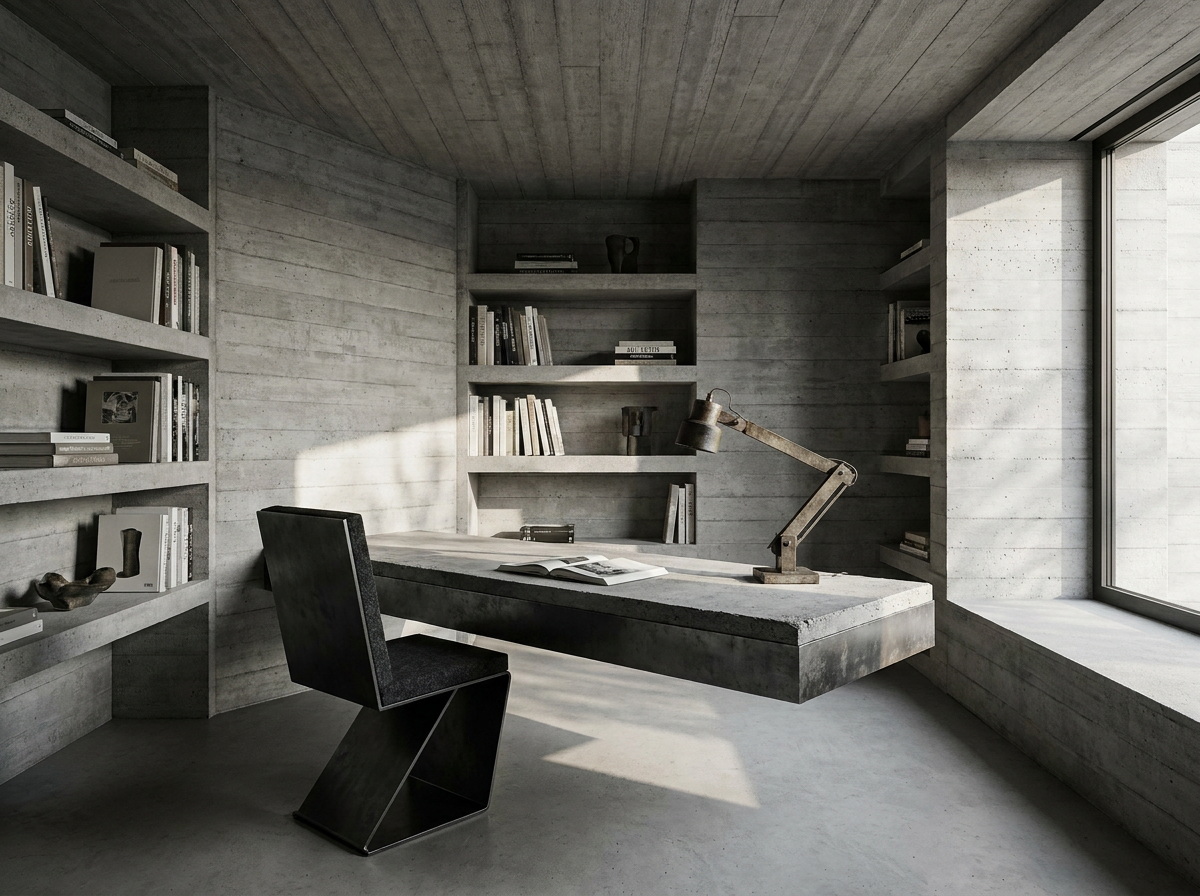
Study Room

Where Architectural Contemporary is most productive. A cantilevered desk built into the wall — no visible legs, no separate furniture. Integrated shelving at the same depth as the desk, flush with the wall plane. Task lighting built into the underside of the shelf above. A single ergonomic chair in leather or performance fabric. Work feels serious and contained.

Architectural Contemporary wash room in an Indian home

07 · Room

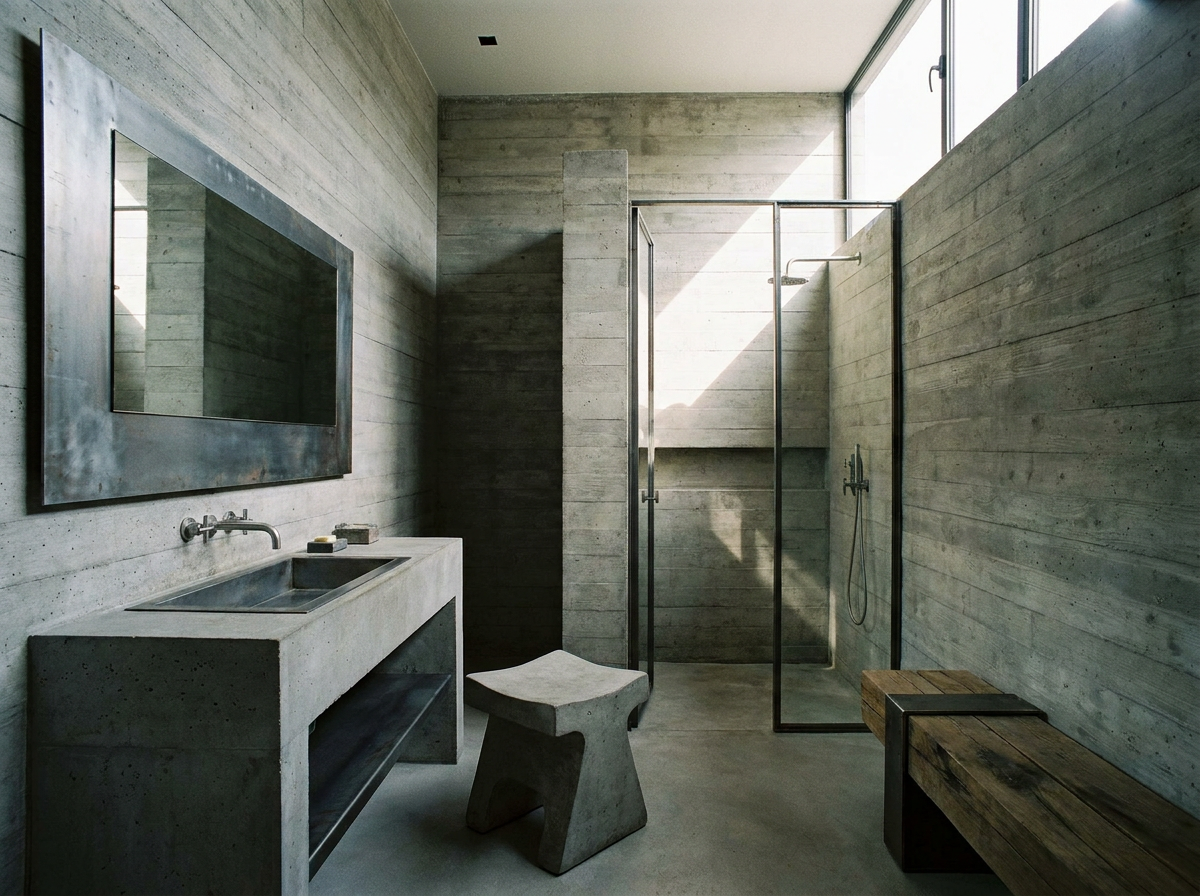
Wash Room

Full-height microcement walls and floor, seamless from entry to shower. A floating vanity in matte charcoal or warm timber with an undermount basin. Concealed cistern. Matte black or gunmetal fixtures throughout. A single back-lit mirror, recessed into the wall plane, providing the only light source beyond a small frosted window.

Architectural Contemporary balcony in an Indian home

08 · Room

Balcony

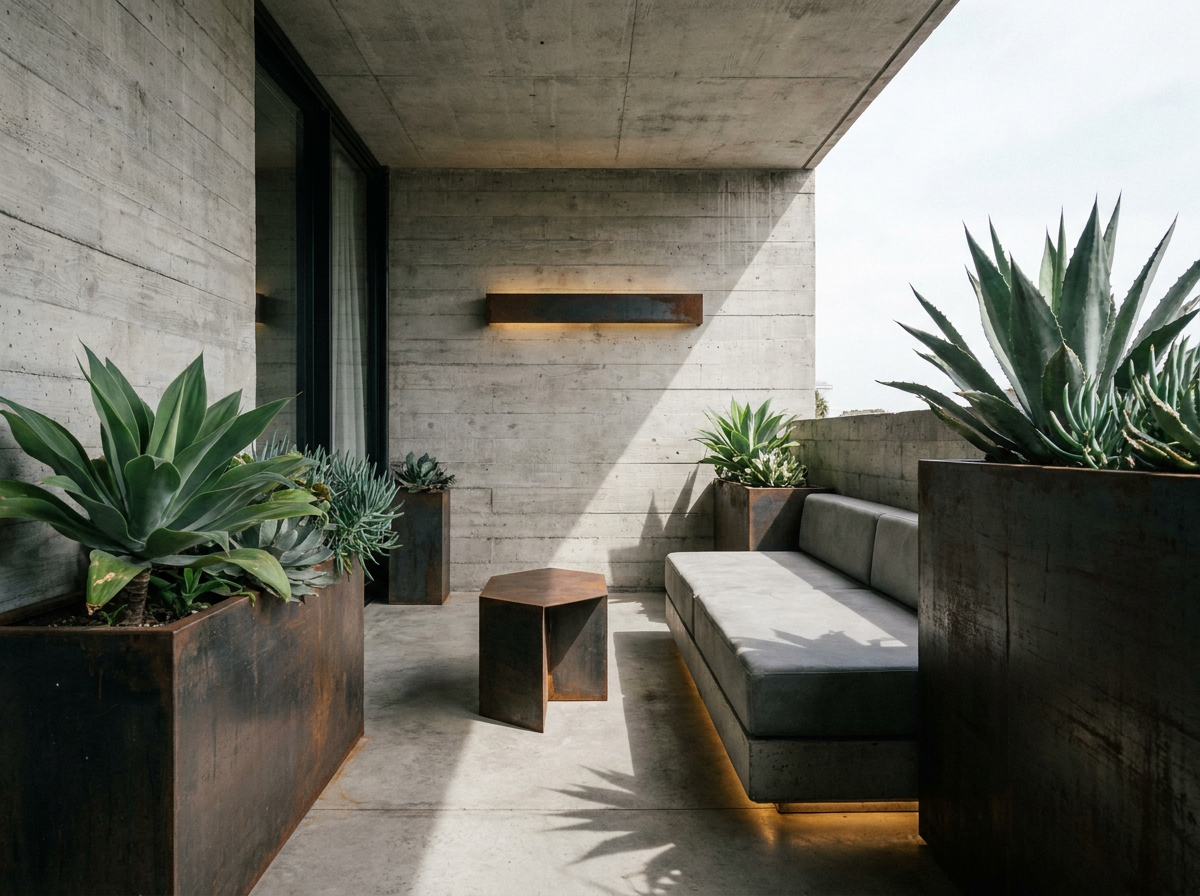
Composite or concrete decking. Minimal furniture — a pair of powder-coated steel chairs and a slab side table. No plants unless they are structural — a large architectural succulent or a single olive in a concrete pot. The balcony is an extension of the structural palette outdoors.

Every space is tailored to your home, your light and how you actually live.

One way to think about your home

Architectural Contemporary resonates with households who find beauty in structure and precision, who prefer a home that holds its own through the quality of the space rather than through objects and decoration. If you have spent time in well-designed hotels or commercial spaces and thought "I want my home to feel like this" — this aesthetic is probably in the direction you are pointing.

It is one of the reference points on our site, not a menu item. Your design direction comes from the G.R.I.N. process.

Not sure which style is yours?

The G.R.I.N. Process begins with a conversation — not a questionnaire.

We talk about how you actually use your home, what you want to feel when you walk in the door, and what has and hasn't worked in spaces you have lived in before. From there, we recommend a direction — Architectural Contemporary, a blend, or something else entirely.

Frequently asked

Architectural Contemporary, answered

Does Architectural Contemporary feel cold to live in?

The risk is real and the solution is in the specification. Warm microcement tones, timber inserts, and performance-fabric upholstery prevent the palette from reading as cold. The difference between a cold and a warm version of this aesthetic is mostly in the colour temperature of the materials and the lighting — both of which are design decisions, not accidents.

Is microcement suitable for Delhi's climate and dust levels?

It is one of the best choices for Delhi specifically. Sealed microcement has no grout lines, resists dust accumulation, and stays cooler than stone in summer. It requires resealing approximately every five years, which is a one-day intervention.

Is this aesthetic compatible with a family with children?

Yes, with the right material specification. Performance fabric upholstery, sealed microcement, and closed built-in storage are all chosen precisely because they withstand daily family life. The aesthetic requires more careful specification than a forgiving maximalist style, but it holds up when done correctly.

How is Architectural Contemporary different from industrial design?

Industrial design celebrates raw materials — exposed brick, visible pipework, bare concrete. Architectural Contemporary refines those instincts: the materials are still honest but they are finished, sealed, and precisely detailed. It is the difference between a warehouse conversion and a considered architectural interior that draws on similar influences.

Can this aesthetic work in a standard Delhi builder-flat?

Yes — and it often transforms them most dramatically. The structural neutrality of a new-build flat — white walls, plain ceilings, no existing architectural character — is the ideal starting canvas for this aesthetic.

You may also like

Related styles

WhatsApp Call