- Colour palette
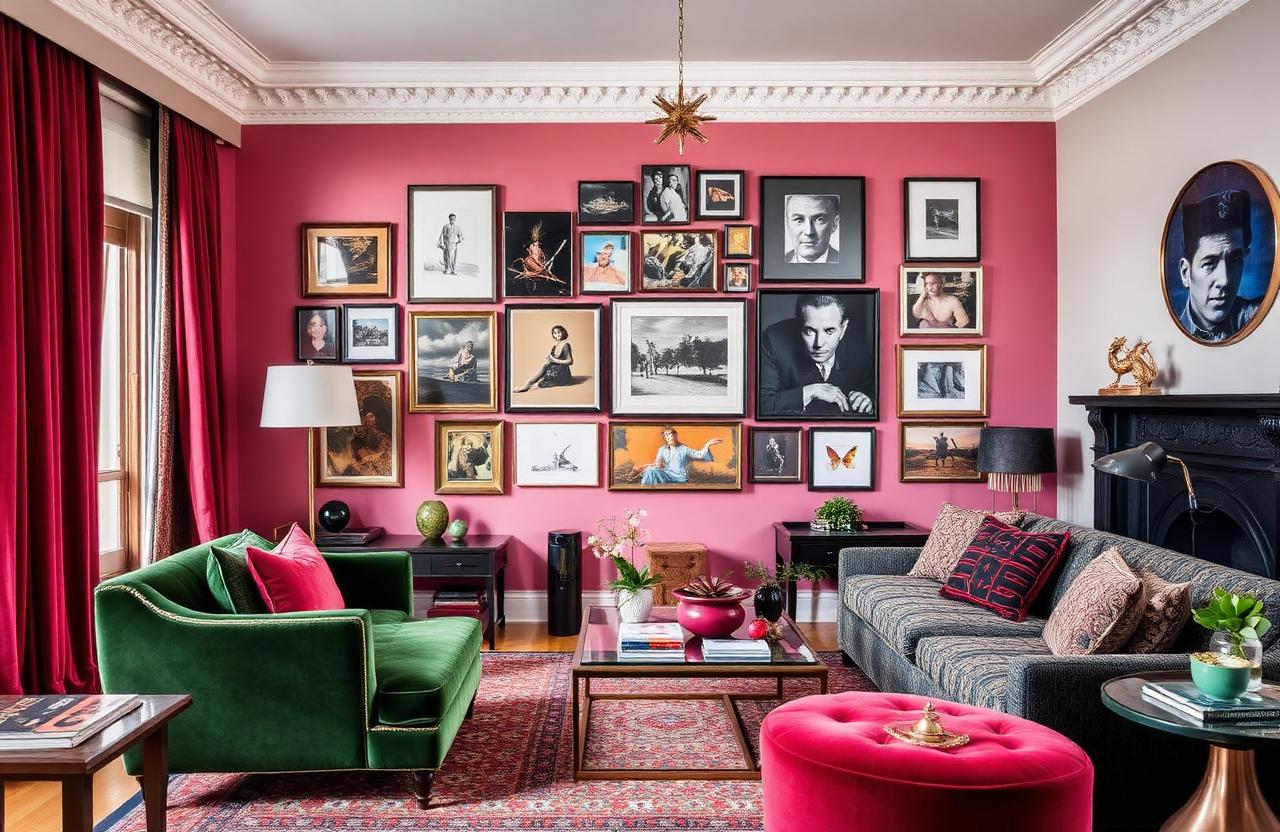
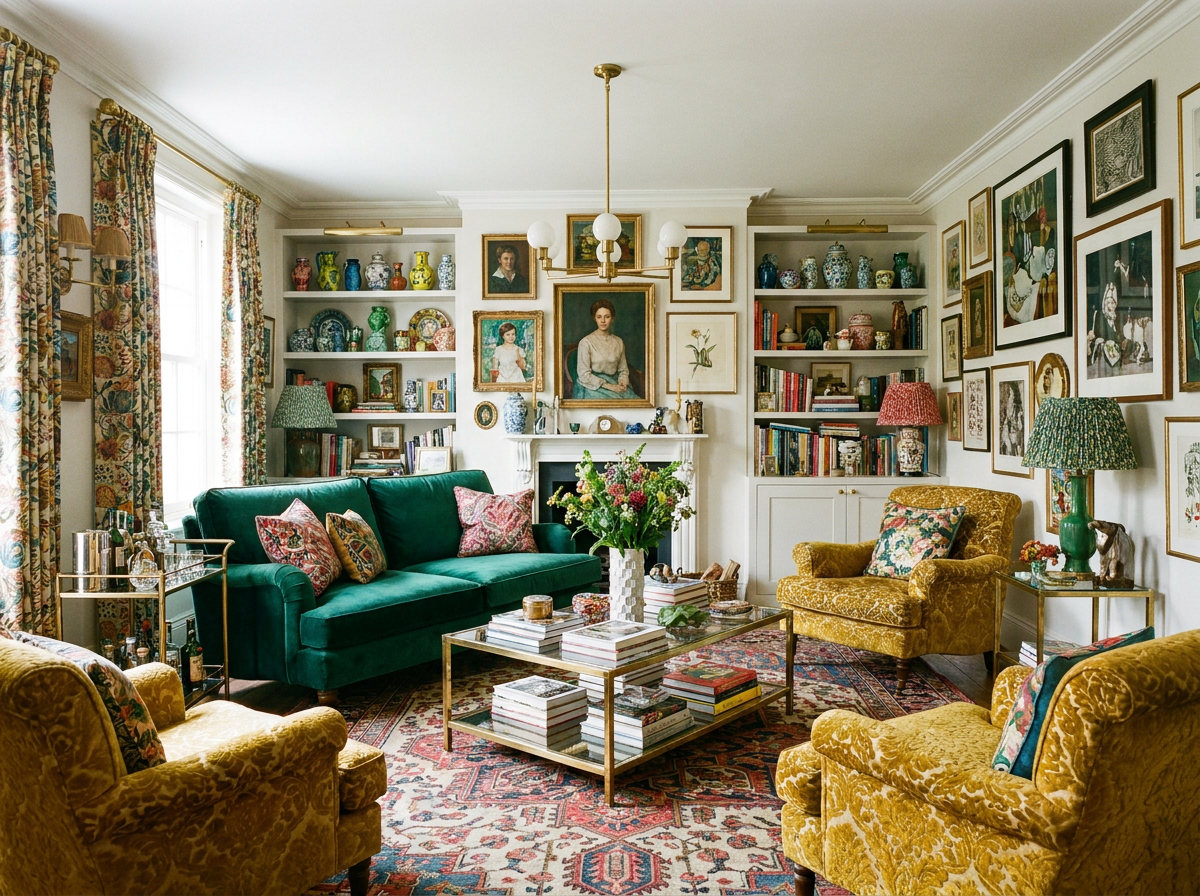
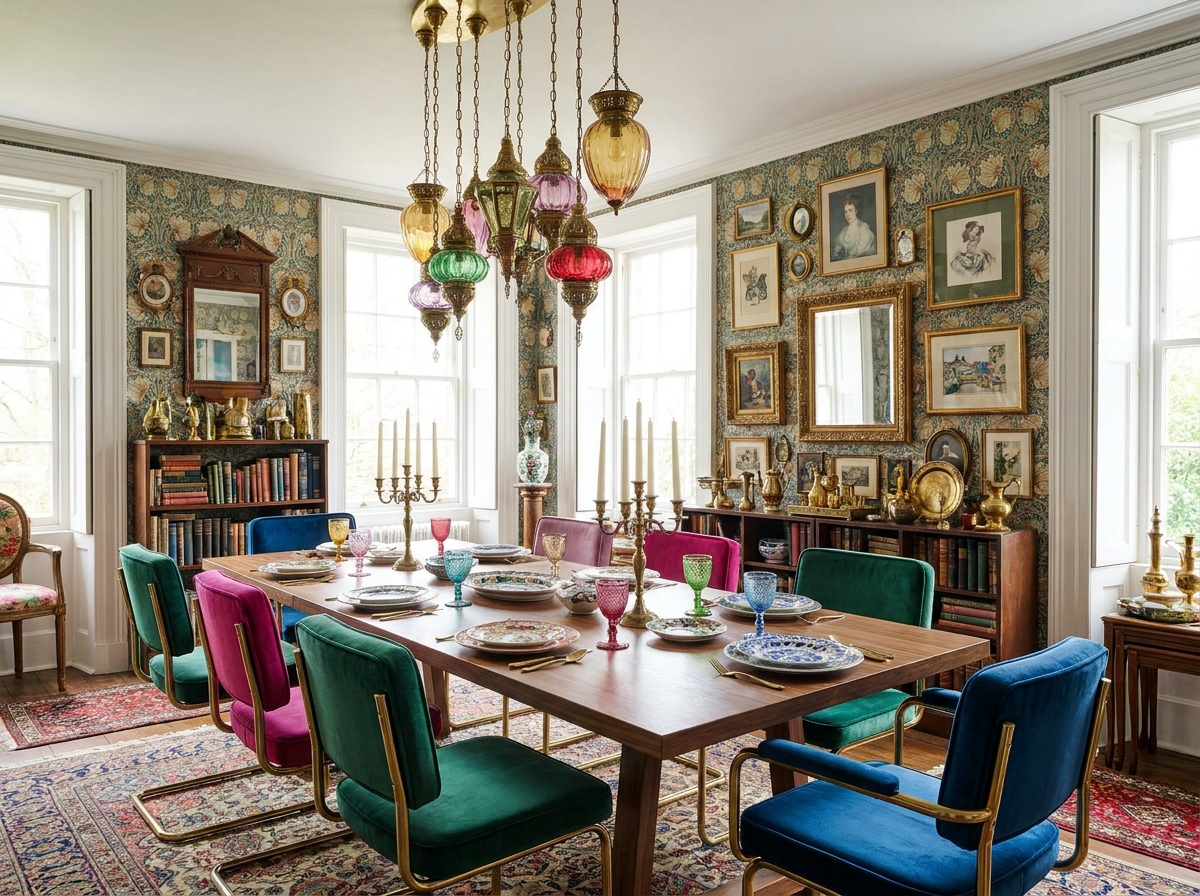
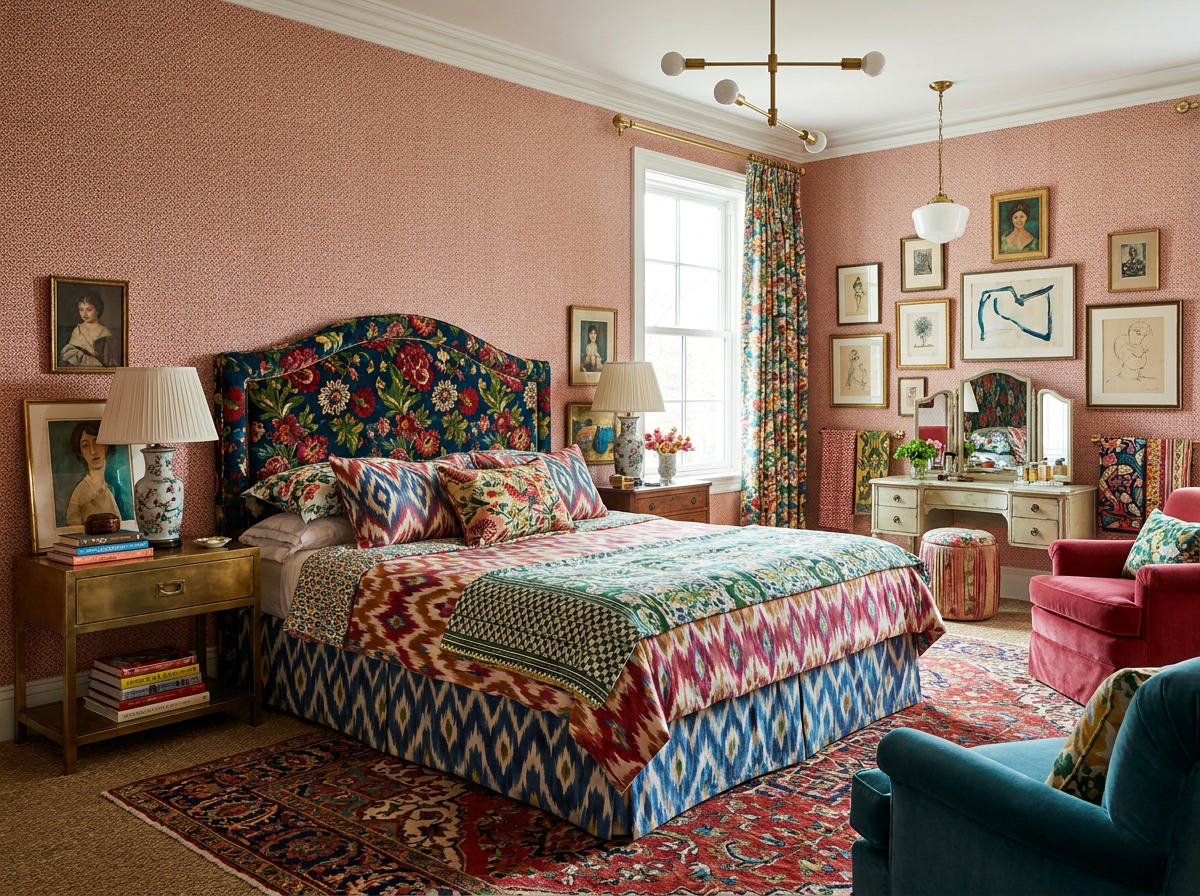
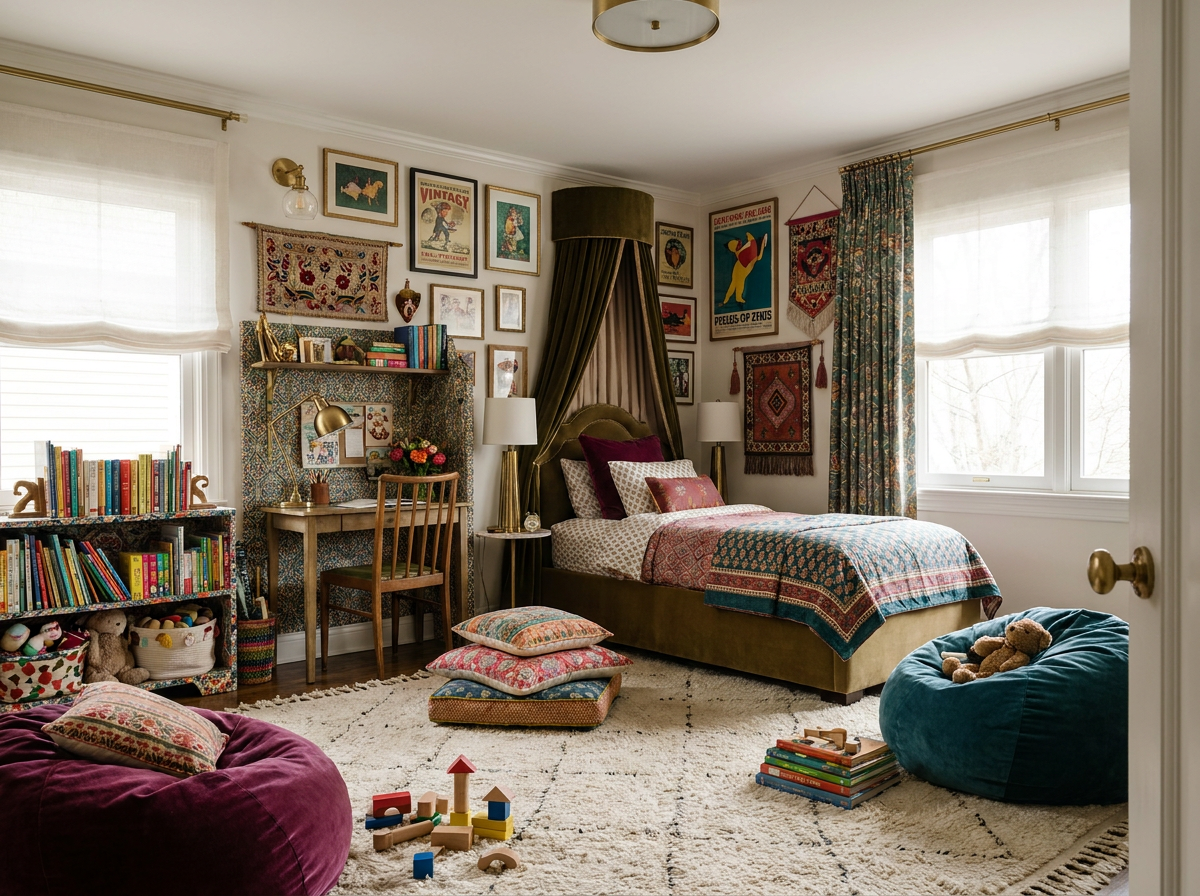
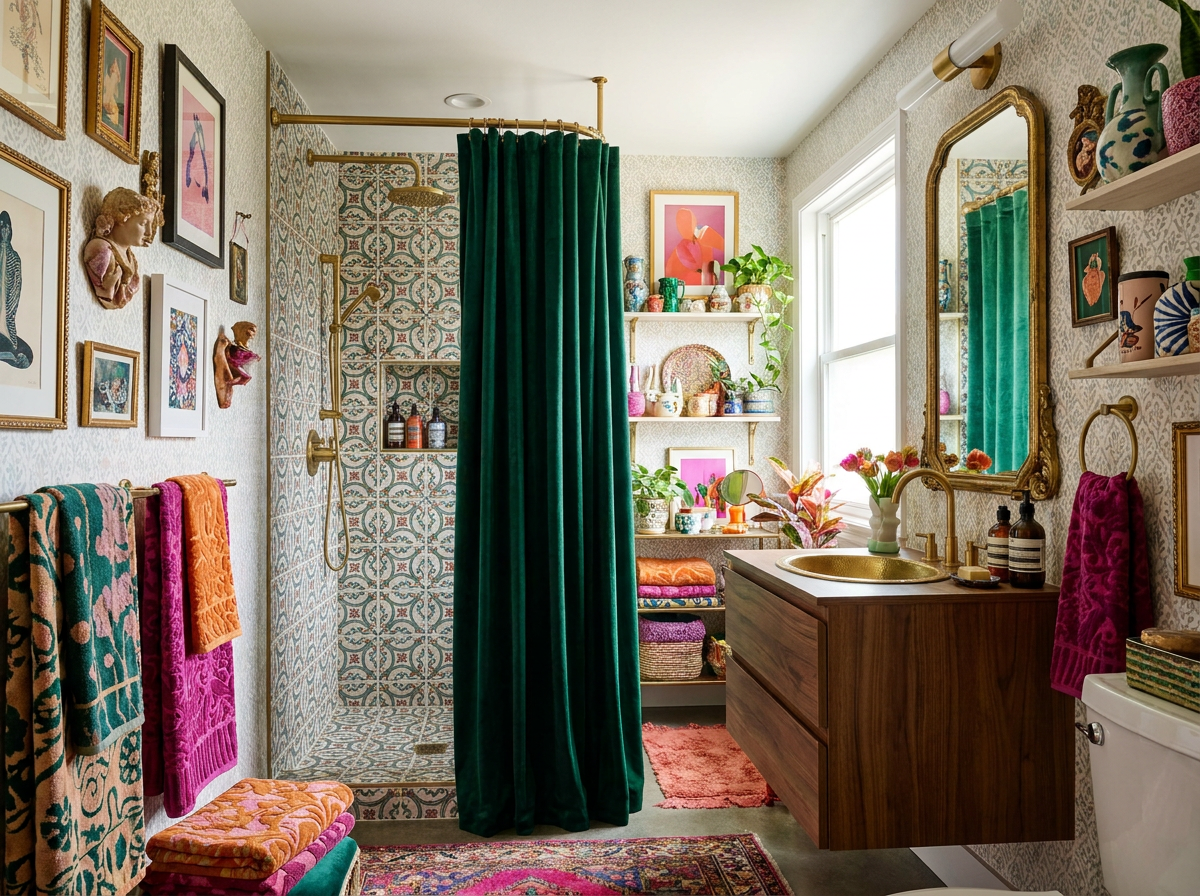
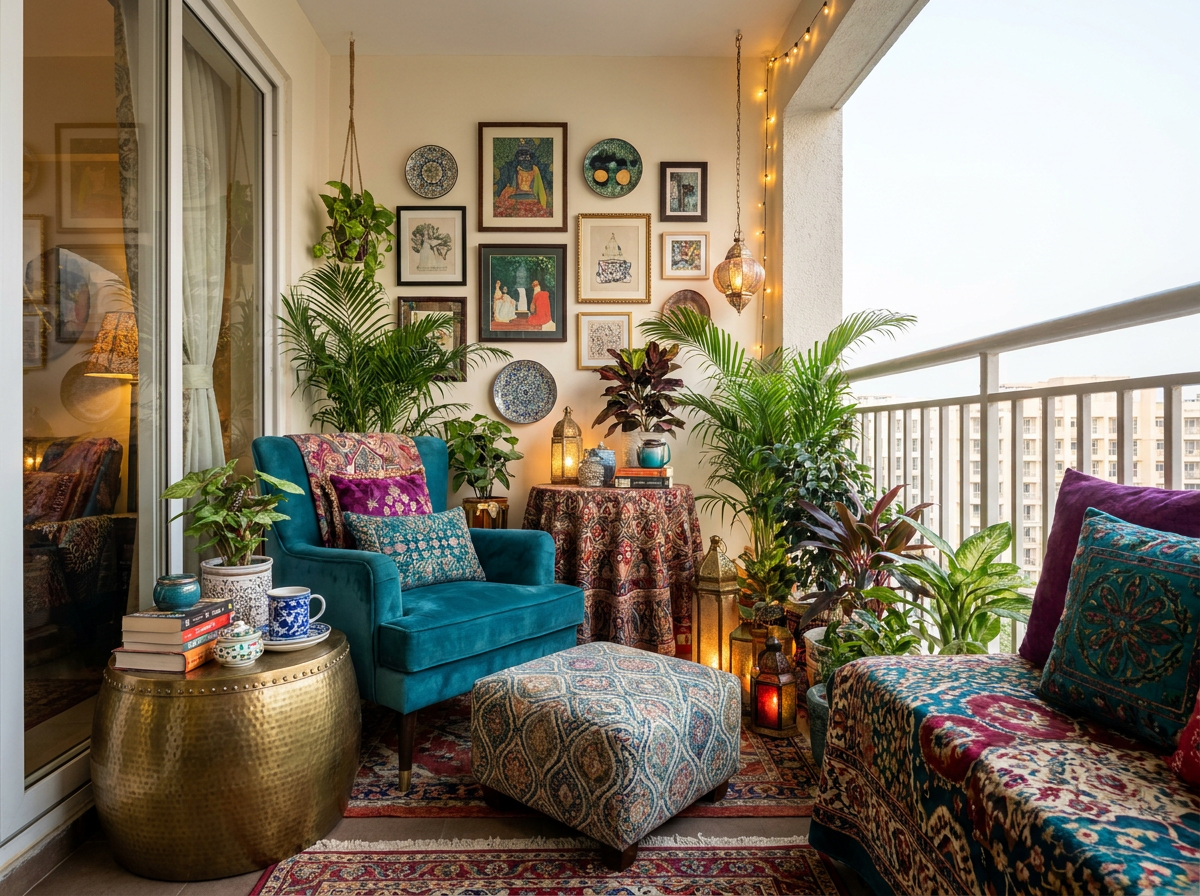
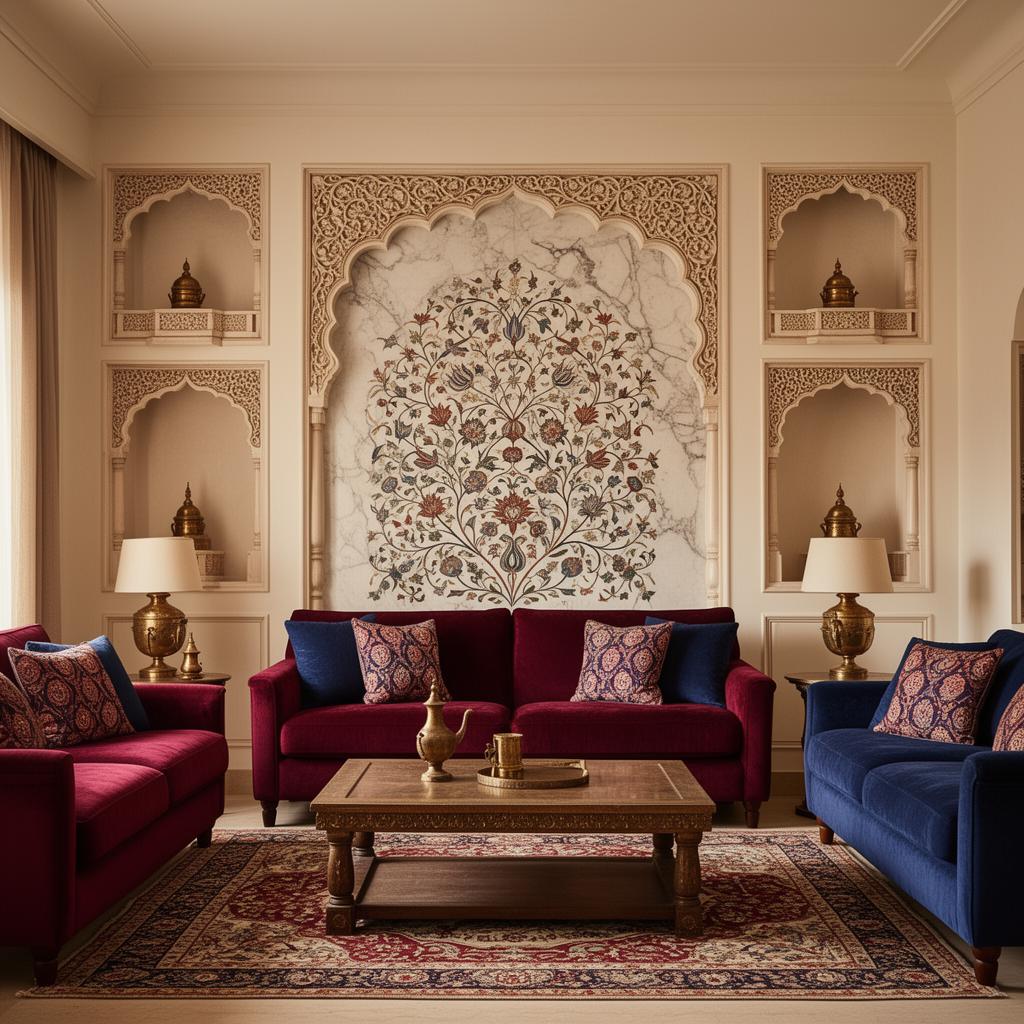
- Deep jewel tones as accent — indigo, forest green, ochre, burgundy — against a backdrop of warm white matte plaster or cream lime wash. The base is always restrained; the richness comes from objects and textiles, not from walls.
- Materials
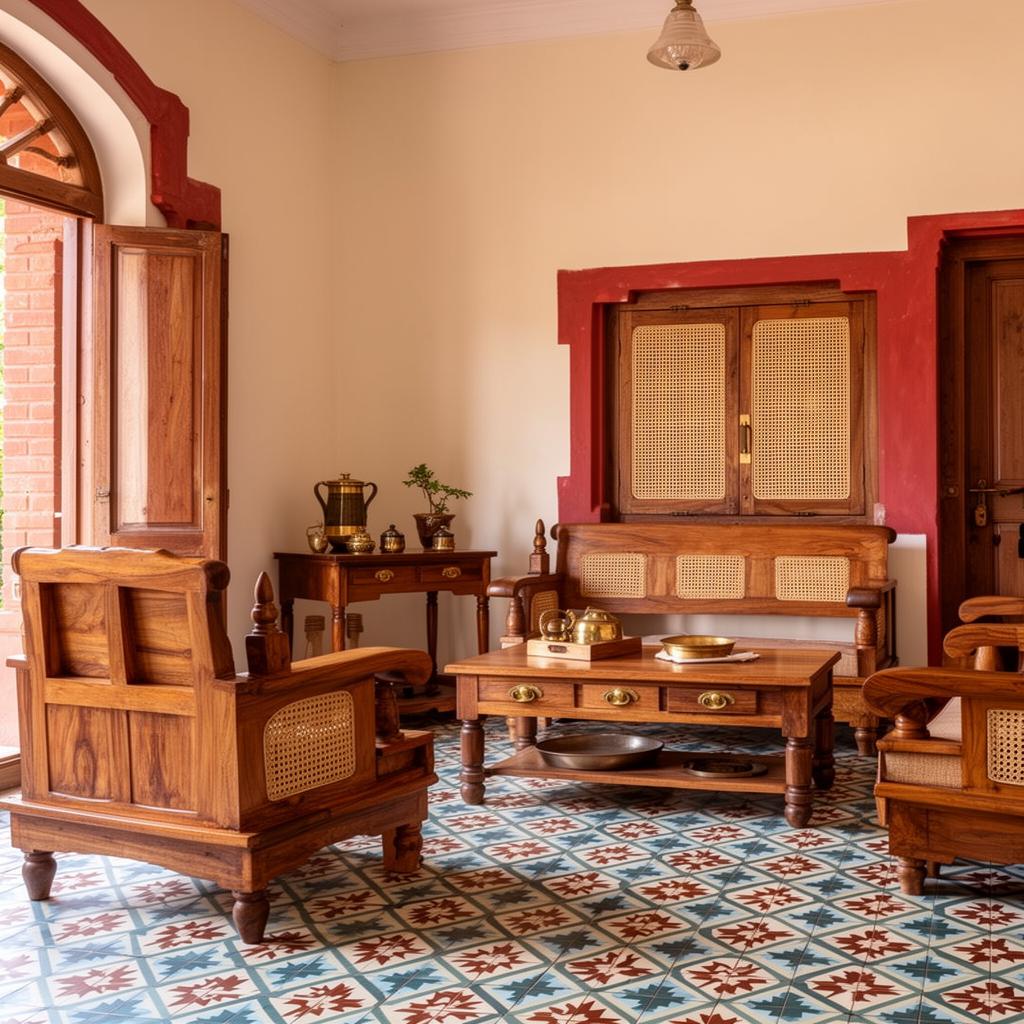
- Antique brass. Handwoven dhurries and ikats. Matte plaster walls. One significant heirloom piece per room — not scattered throughout. Modern jaali in metal or timber, which references the traditional screen without replicating it literally. Handmade ceramic in earthy glazes.
- The heirloom rule
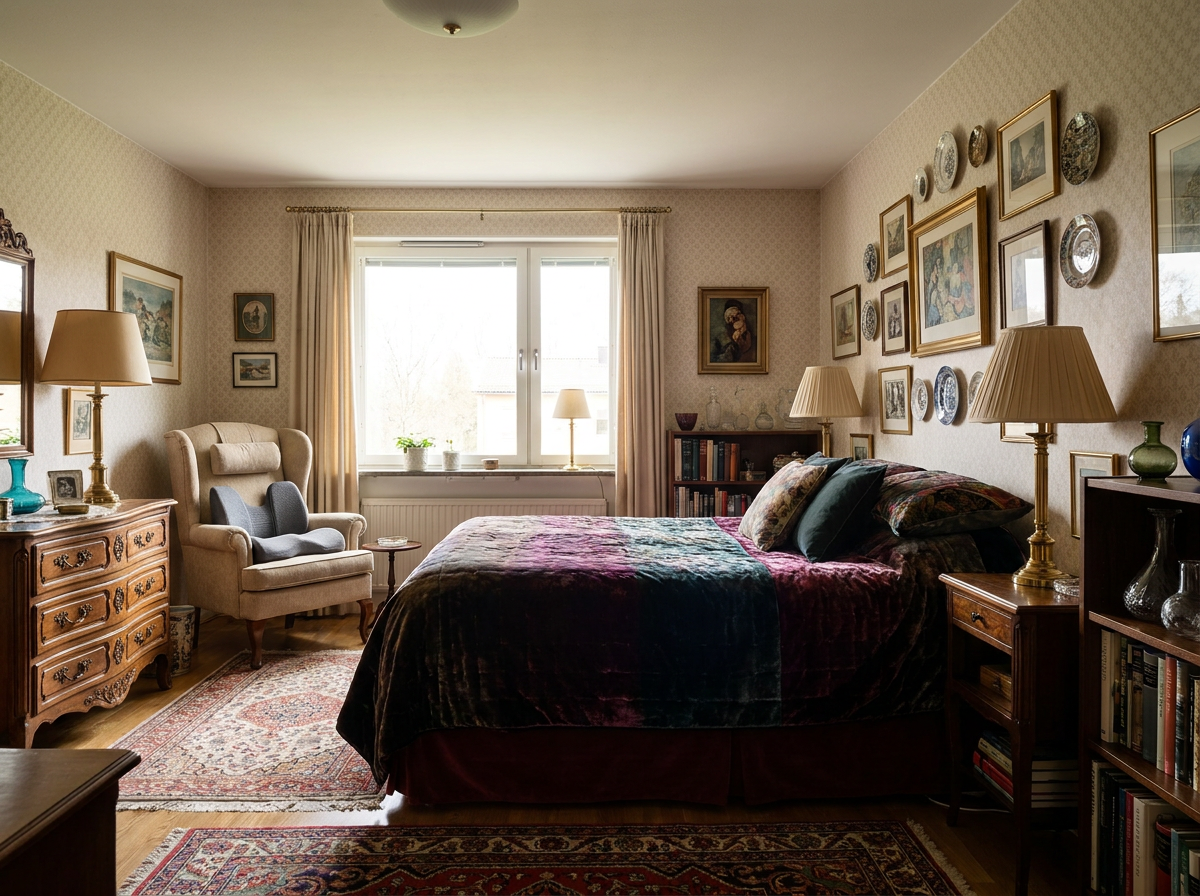
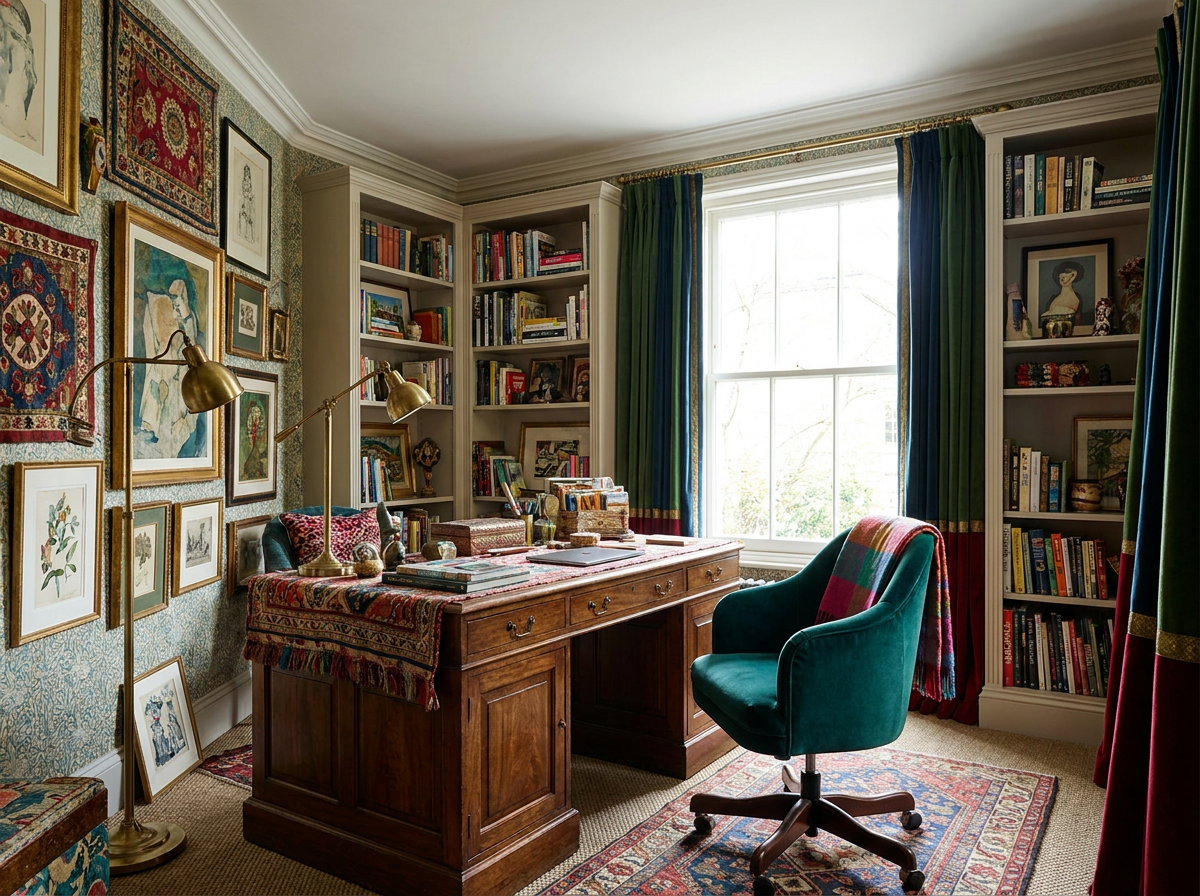
- One significant inherited or antique piece per room, placed deliberately against a considered backdrop. Two or more significant pieces in the same room tip the balance toward a curio shop. One, placed correctly, reads as intentional.
- Silhouette
- The contemporary furniture — sofa, dining table, bed frame — is clean-lined and relatively simple. It exists to provide the backdrop against which the heirloom piece reads clearly. If the backdrop is too busy, the piece gets lost.
- Textiles
- This is where the aesthetic is most distinctly Indian. Hand-block print cushion covers, handwoven dhurries, ikat throws. These are the elements that carry cultural depth without requiring structural intervention.