- Colour palette
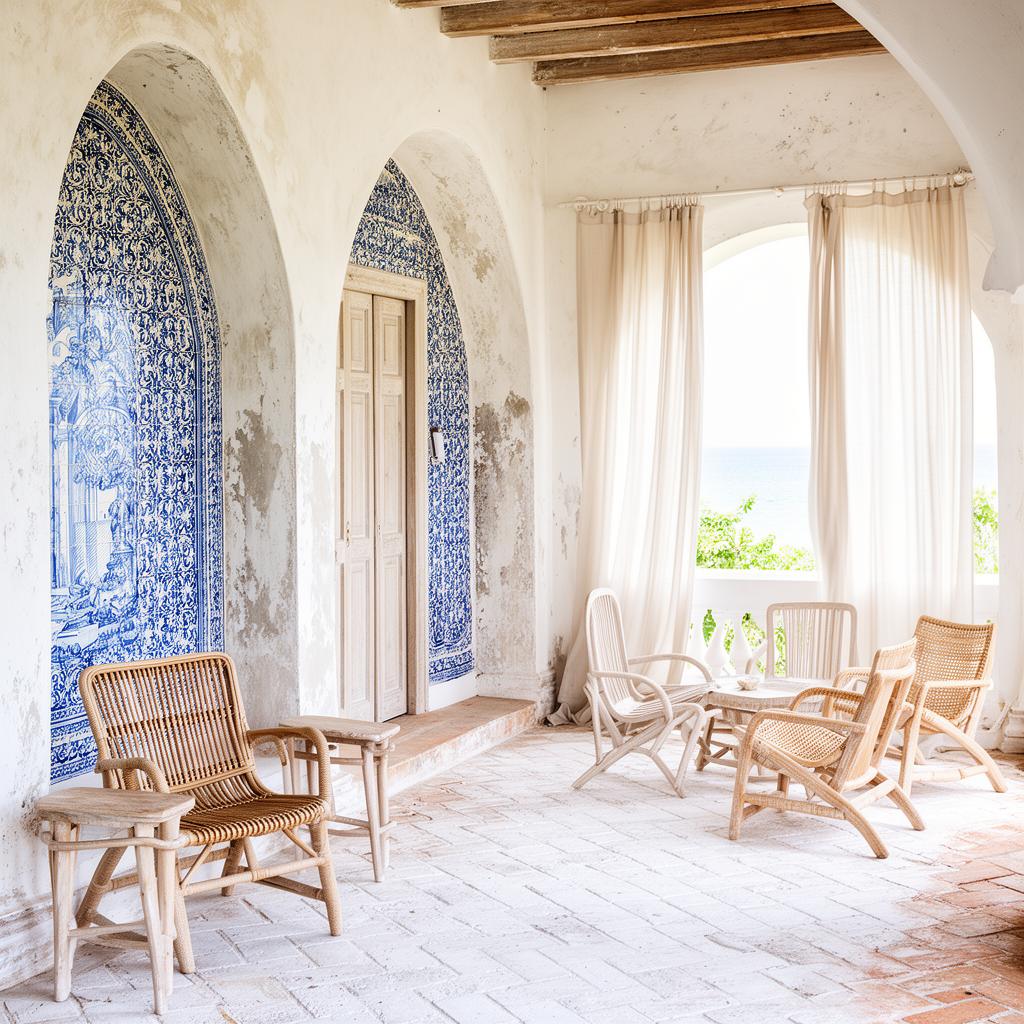
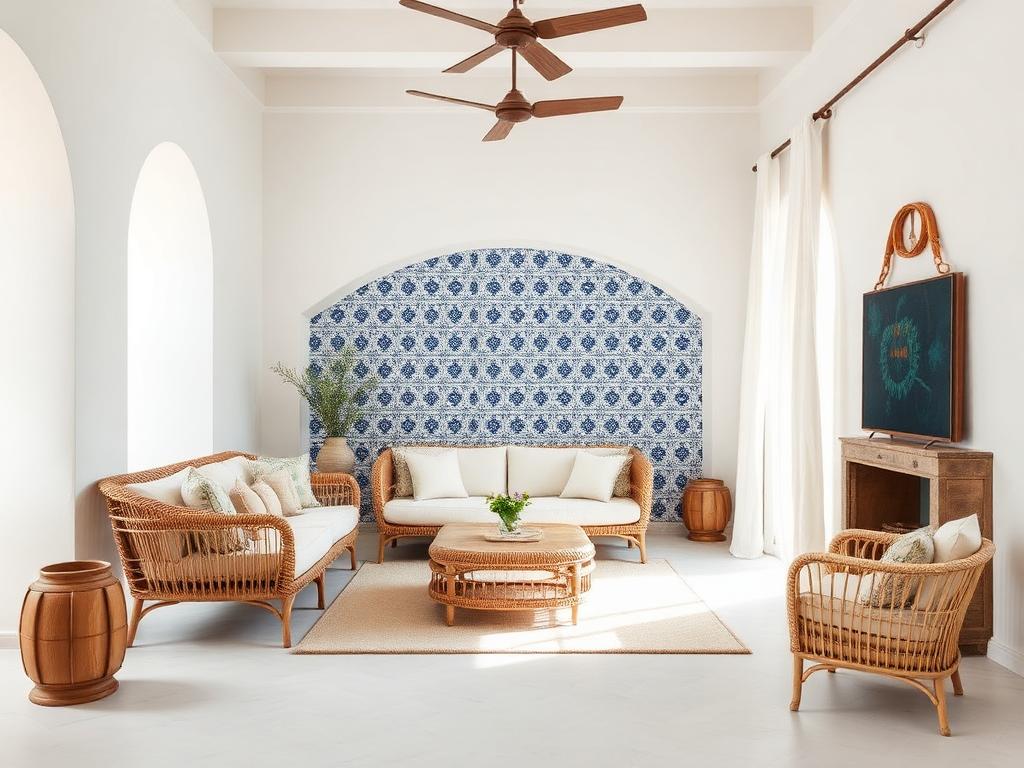
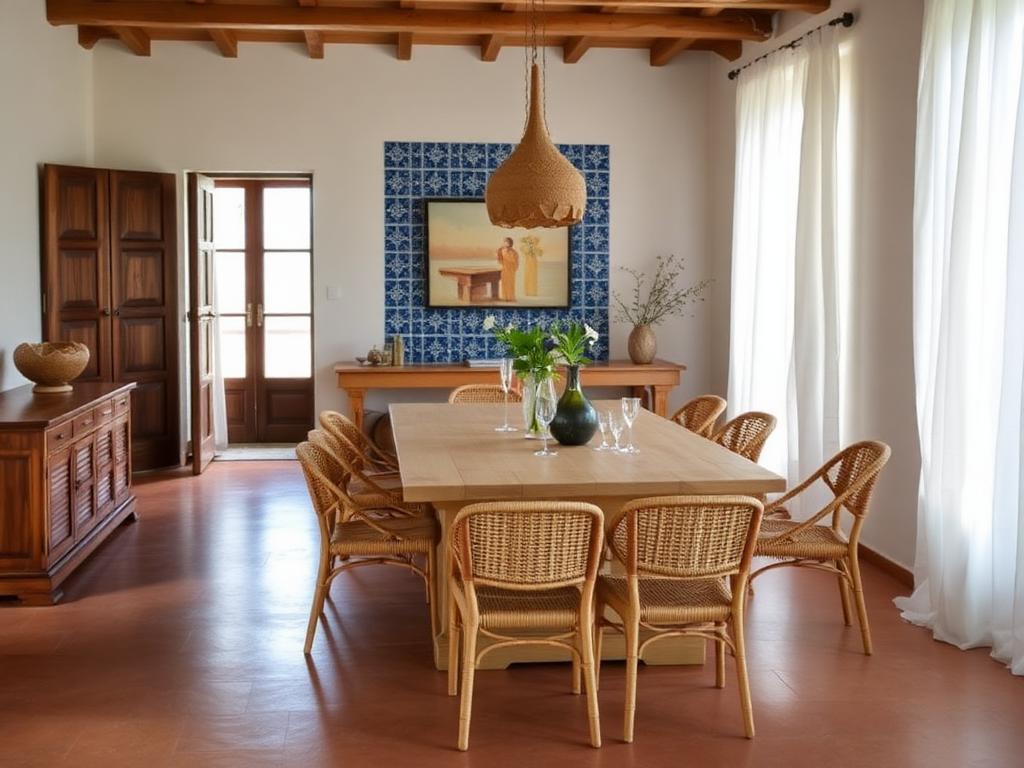
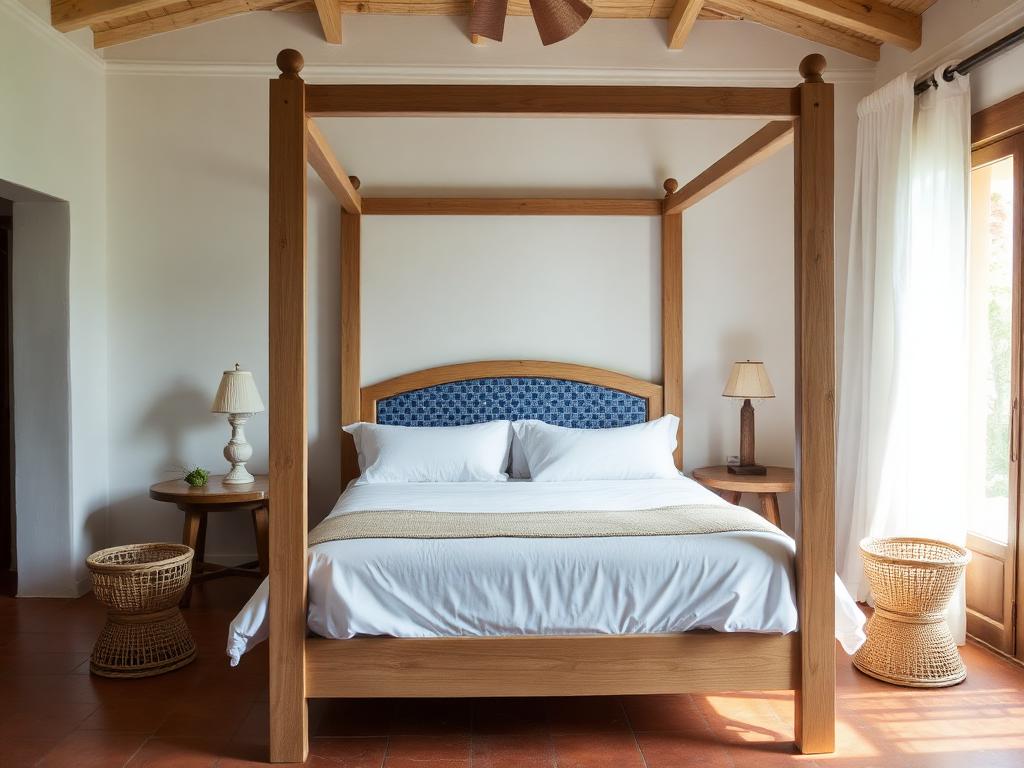
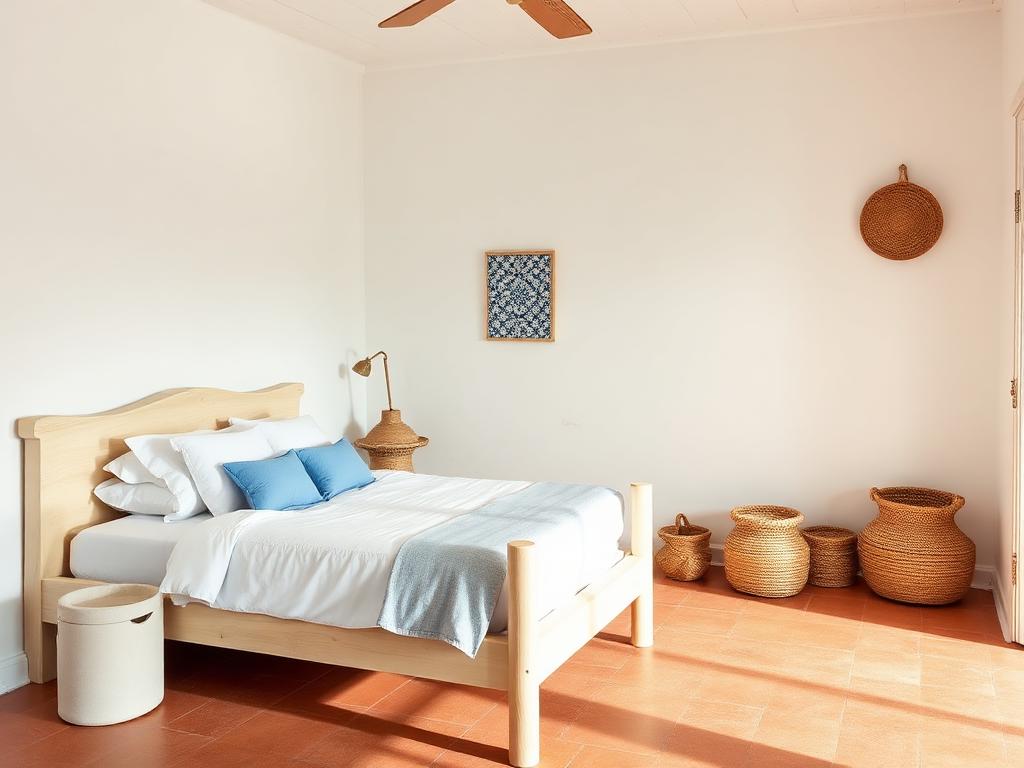
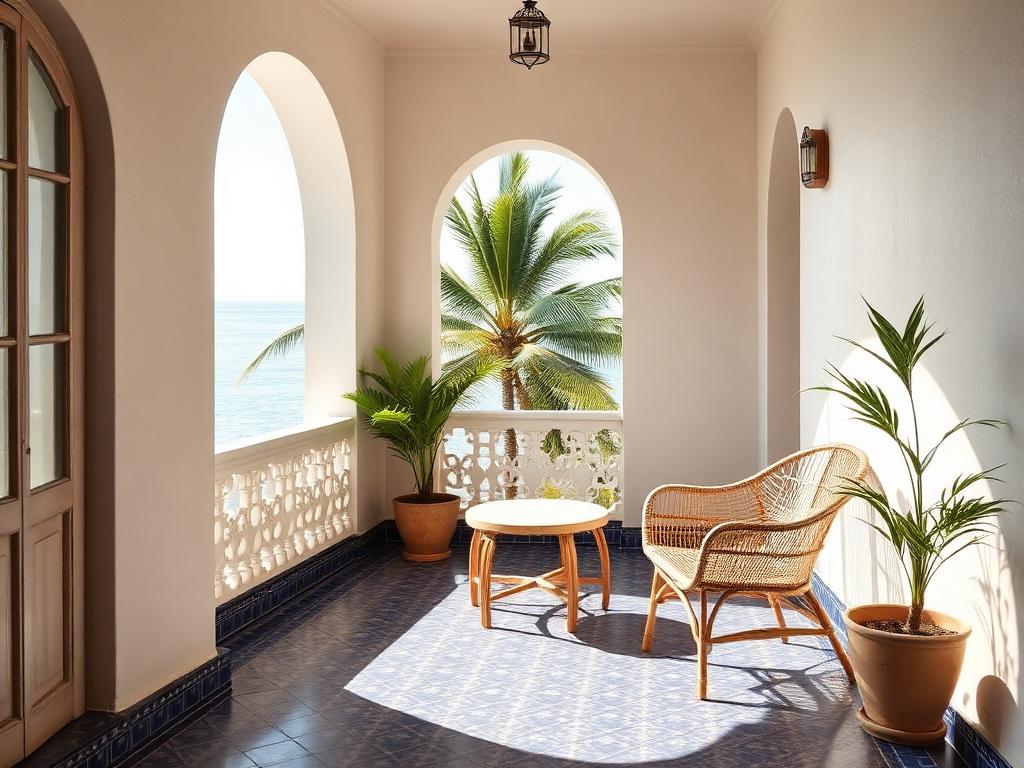
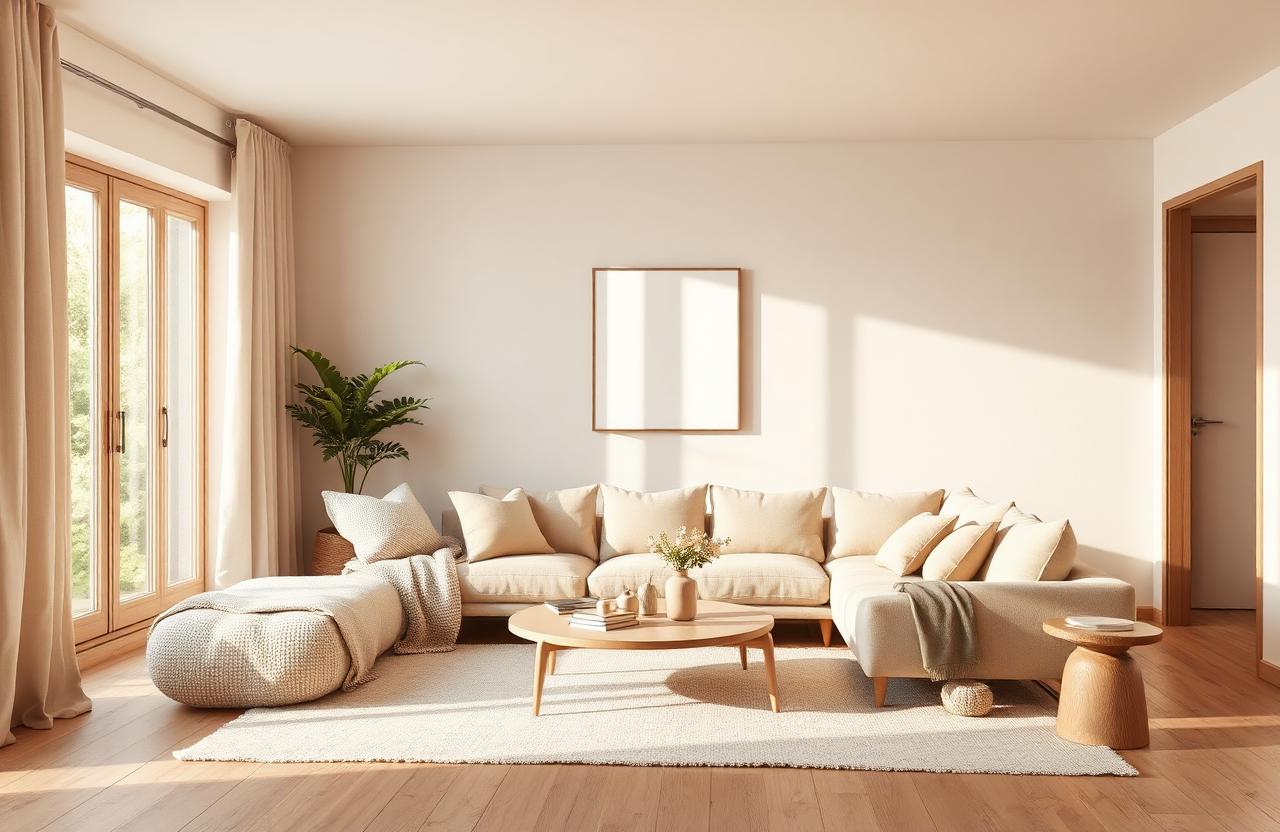
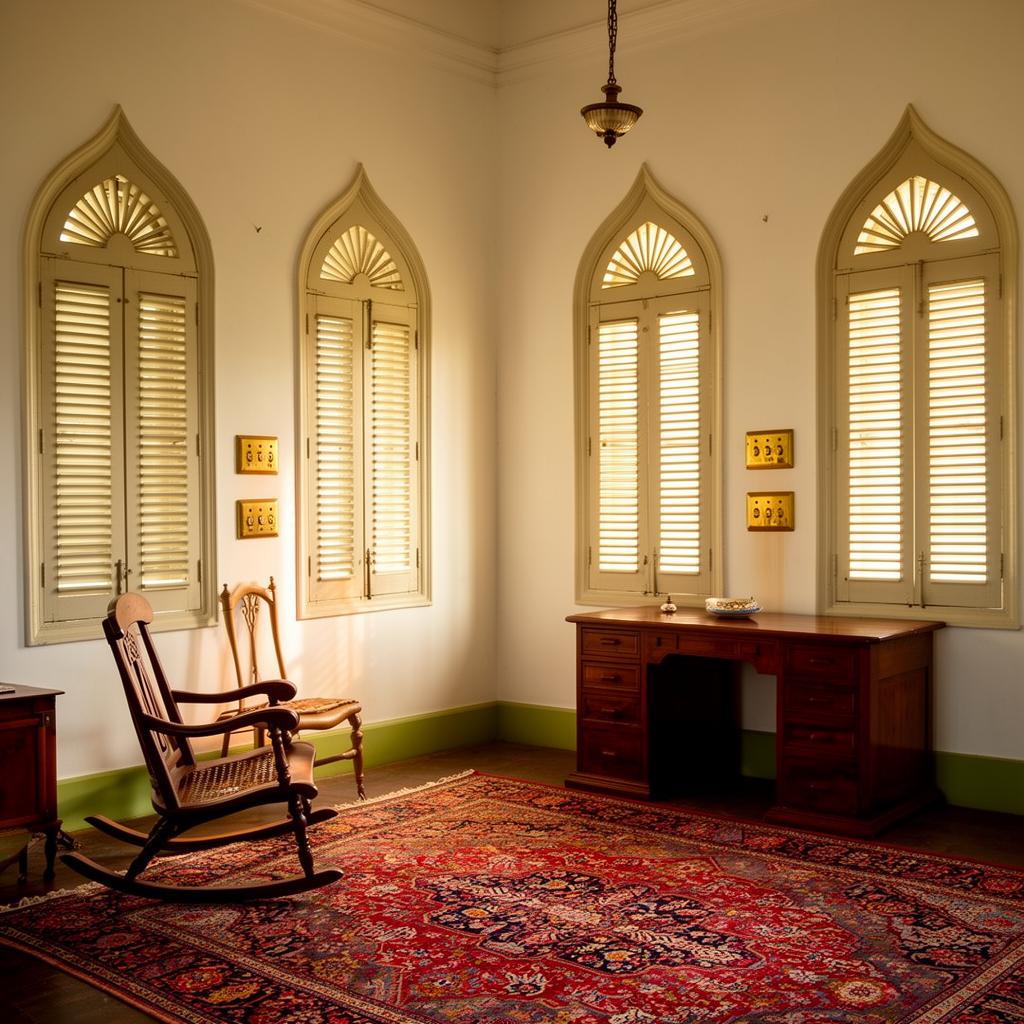
- Warm white as the dominant base — lime wash or mineral paint rather than bright white. Blue-and-white as the accent — the azulejo palette, used in specific moments rather than throughout. Warm terracotta and ochre as secondary accents. Bleached timber tones throughout.
- Materials
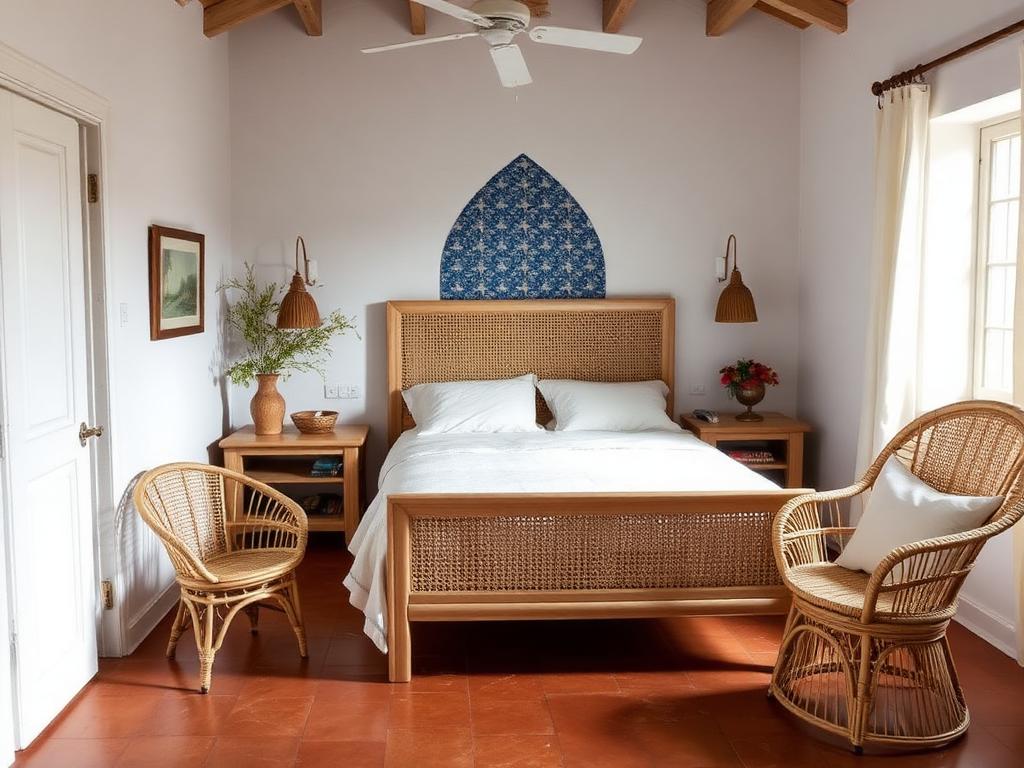
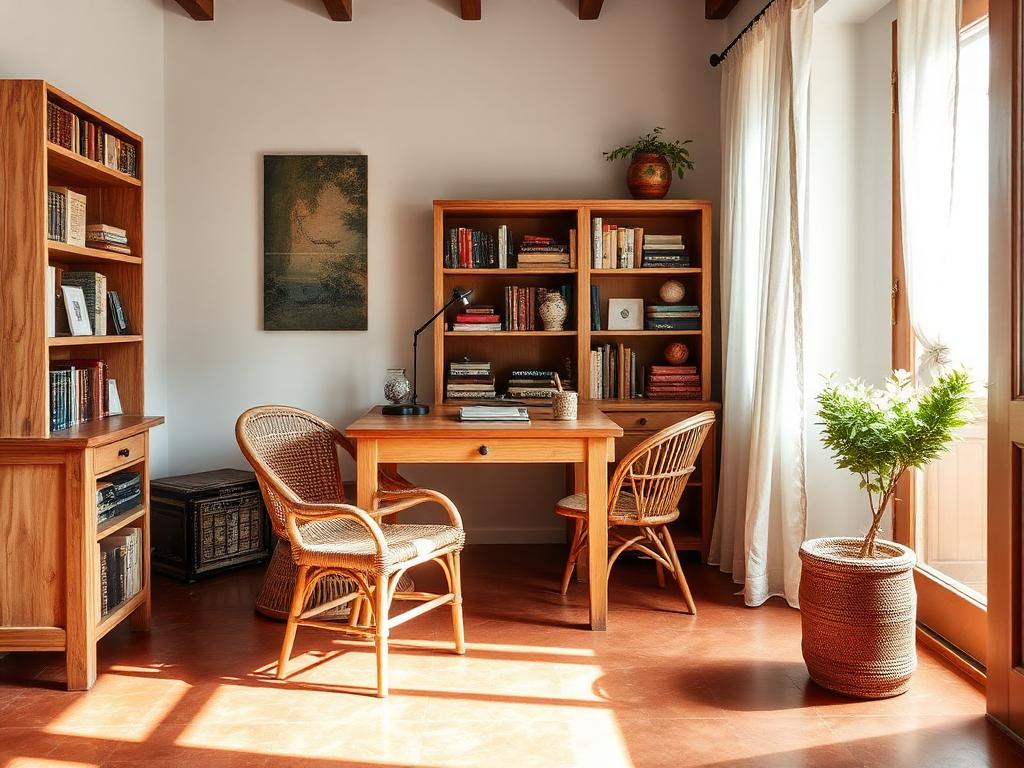
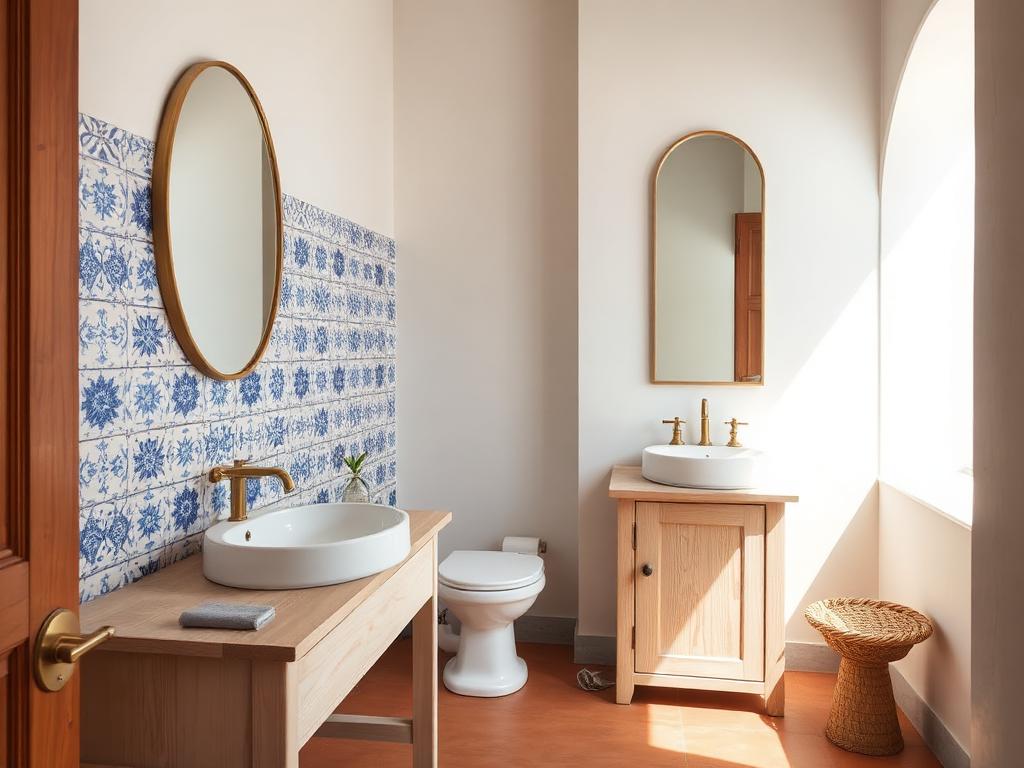
- Arched doorways and niches — the Portuguese architectural vocabulary that defines the aesthetic's structure. Blue-and-white azulejo tile accents on feature walls, backsplashes, and bathroom surfaces. Lime-washed textured walls. Rattan, cane, and bleached teak in the furniture. Whitewashed terracotta floors or large-format ivory tile.
- Arches as architecture
- The arch is the defining structural element — arched doorways, niches, windows. In a standard Delhi flat with rectangular openings, arches are created within the interior architecture: a recessed niche with an arched top, a dividing wall with an arched opening. The arch changes the character of a room immediately and significantly.
- Tile as accent, not surface
- In a Delhi flat, azulejo tiles are used as accents — a tiled feature panel behind a kitchen backsplash, a tiled niche in a bathroom, a tiled border on an exterior wall. This provides the visual character of the aesthetic without the maintenance complexity of full-tile surfaces in a non-coastal climate.