Pixy G.R.I.N. — Great Residential Interiors Network
All styles
The Mindful Sanctuary signature interior

Designed for how we live in Delhi NCR

The Mindful Sanctuary

A grounded, organic retreat from the city.

Delhi NCR is loud. The commute is long. The workday does not end cleanly. By the time most people get home, they do not want their home to ask anything of them.

The Mindful Sanctuary is the design response to that reality. It is not a spa aesthetic lifted from a Pinterest board — it is a considered approach to how a home can actively support recovery. Low, expansive rooms. Materials that feel good underfoot and to the touch. A palette that does not compete for attention. Spaces that are easy to maintain precisely because maintenance should not be another task at the end of a long day.

A closer look

Inside the aesthetic

A grounded, organic retreat from city chaos — low, expansive, and quietly tactile.

The vibe

The Mindful Sanctuary reads as calm the moment you walk in. Not bare — there is texture everywhere — but visually quiet. Nothing is competing. Nothing is asking to be looked at. The room simply holds you.

It is an aesthetic that rewards slowing down. The materials are chosen to be touched: slatted timber that is warm to the hand, microcement that stays cool underfoot, linen that softens with use. The furniture is low, which keeps the ceiling feeling high and the room feeling open even in a standard Delhi flat with nine-foot ceiling heights.

The design language
Colour palette
Muted clay, sand, warm stone grey, and soft sage. No bright white — the palette leans cream and warm rather than clinical. Accents are absorbed into the palette rather than standing apart from it.
Materials
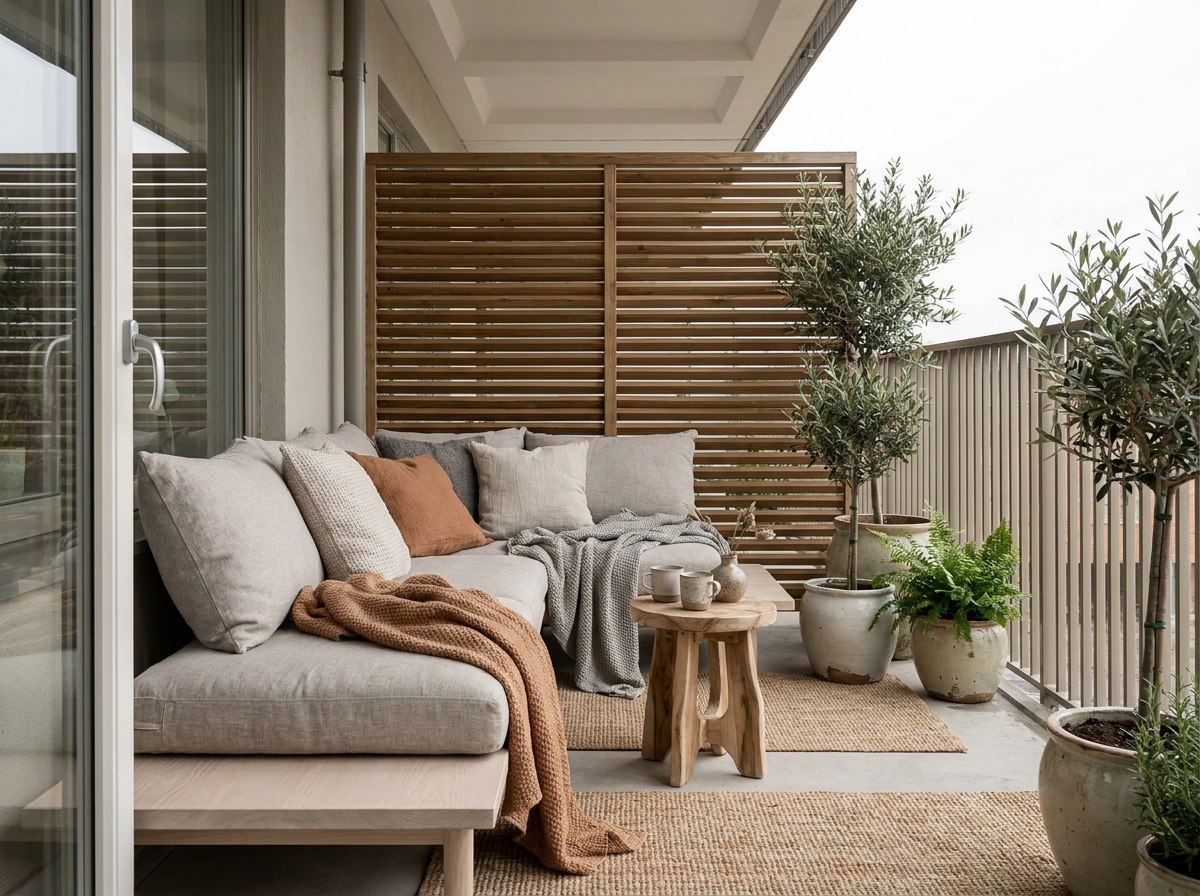
Slatted timber screens and partitions. Microcement on floors and feature walls — smooth, seamless, cool. Handle-less flush cabinetry. Rounded, organic furniture in natural linen or boucle. Cane as a texture accent, not a structural element.
Silhouette
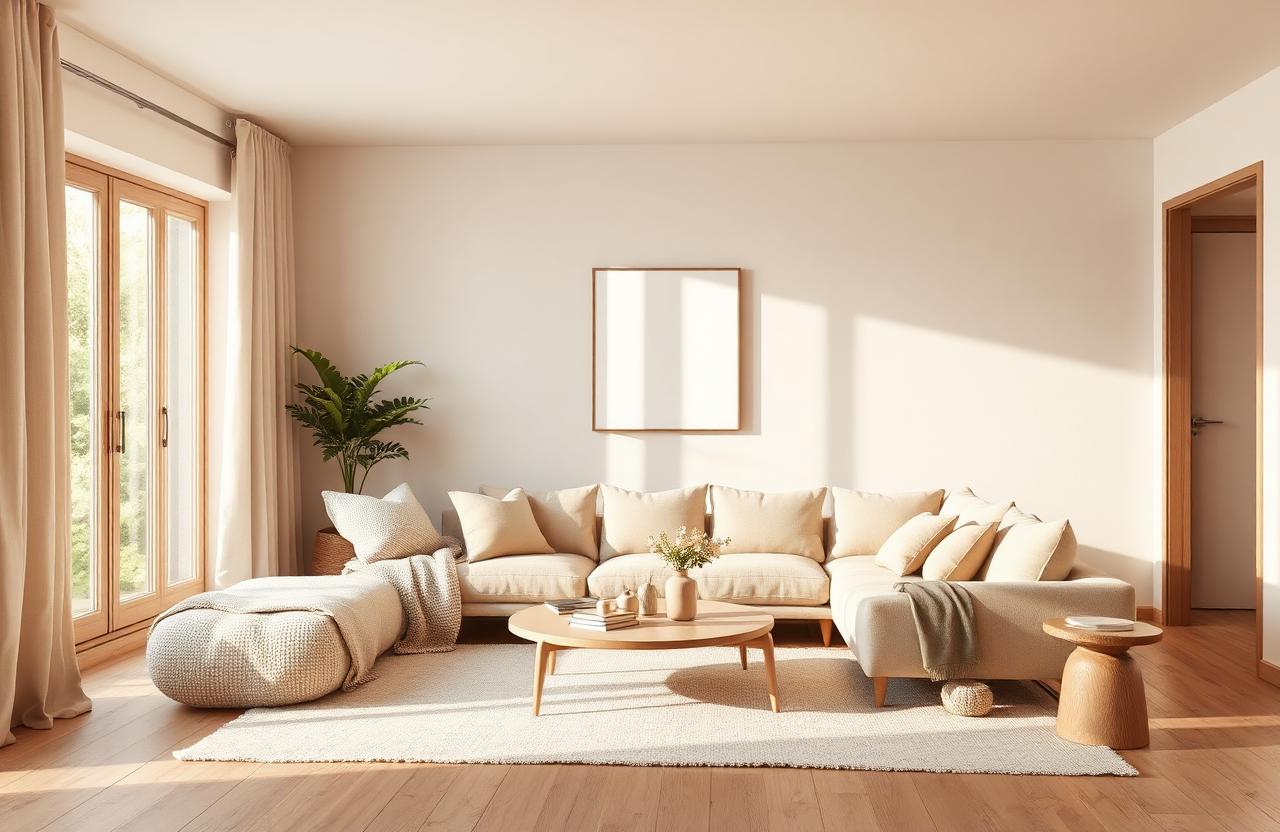
Low and horizontal. Sofas sit close to the ground. Beds are platforms, not statement pieces. Shelving is recessed where possible. The visual centre of gravity of every room is deliberately low, which creates a sense of expansiveness regardless of floor area.
Light
Diffused, warm, layered. Recessed cove lighting rather than centre ceiling fixtures. Wall-mounted reading lights at the correct height. No cold-white LEDs anywhere in the living or sleeping areas.
Texture over pattern
The Mindful Sanctuary uses texture — the grain of timber slats, the slight irregularity of handmade ceramic, the weave of linen — where other aesthetics would use pattern. Pattern stimulates; texture soothes.

The everyday reality

The practical case for The Mindful Sanctuary is as strong as the emotional one.

Microcement floors are seamless — no grout lines to collect dust, no tiles to crack at the joints. They are cooler underfoot than stone in Delhi summers and require nothing beyond a damp mop. Handle-less flush cabinetry means no hardware to collect grease in the kitchen or dust in the bedroom. The muted palette means everyday marks and scuffs are significantly less visible than on bright white or high-gloss surfaces.

Open shelving — a standard feature of many minimalist aesthetics — is largely absent here. The Mindful Sanctuary acknowledges that open shelving requires constant curation to look right, which is the opposite of the intention. Storage is closed, generous, and built in. The surface of the room stays clean by design, not by constant effort.

How to recognise it
  • Slatted timber screens or partitions in at least one key space
  • Microcement or large-format natural stone floors with no visible grout lines
  • A uniformly muted palette — no bright accent colours anywhere
  • Low, rounded furniture upholstered in natural fabric
  • Storage that is predominantly closed and built in

Room-by-room

The Mindful Sanctuary across every space

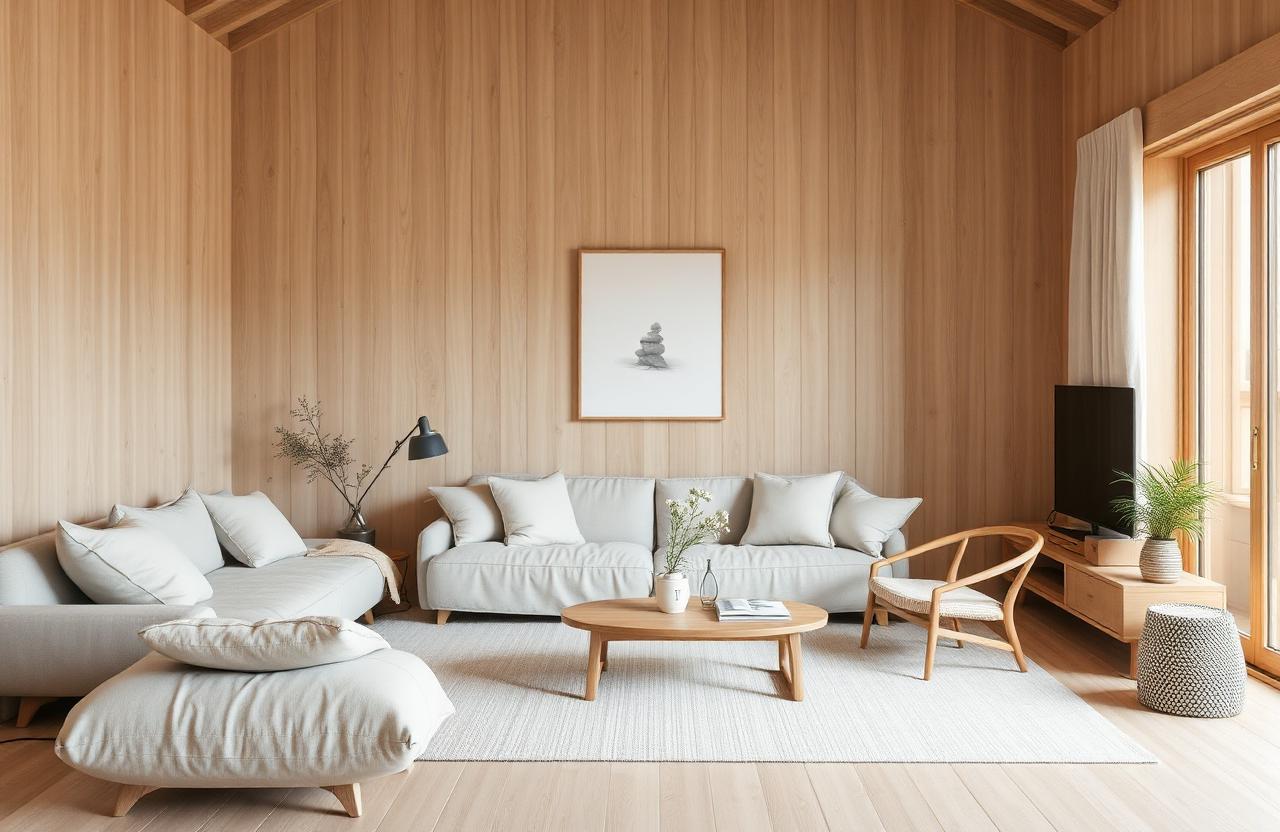
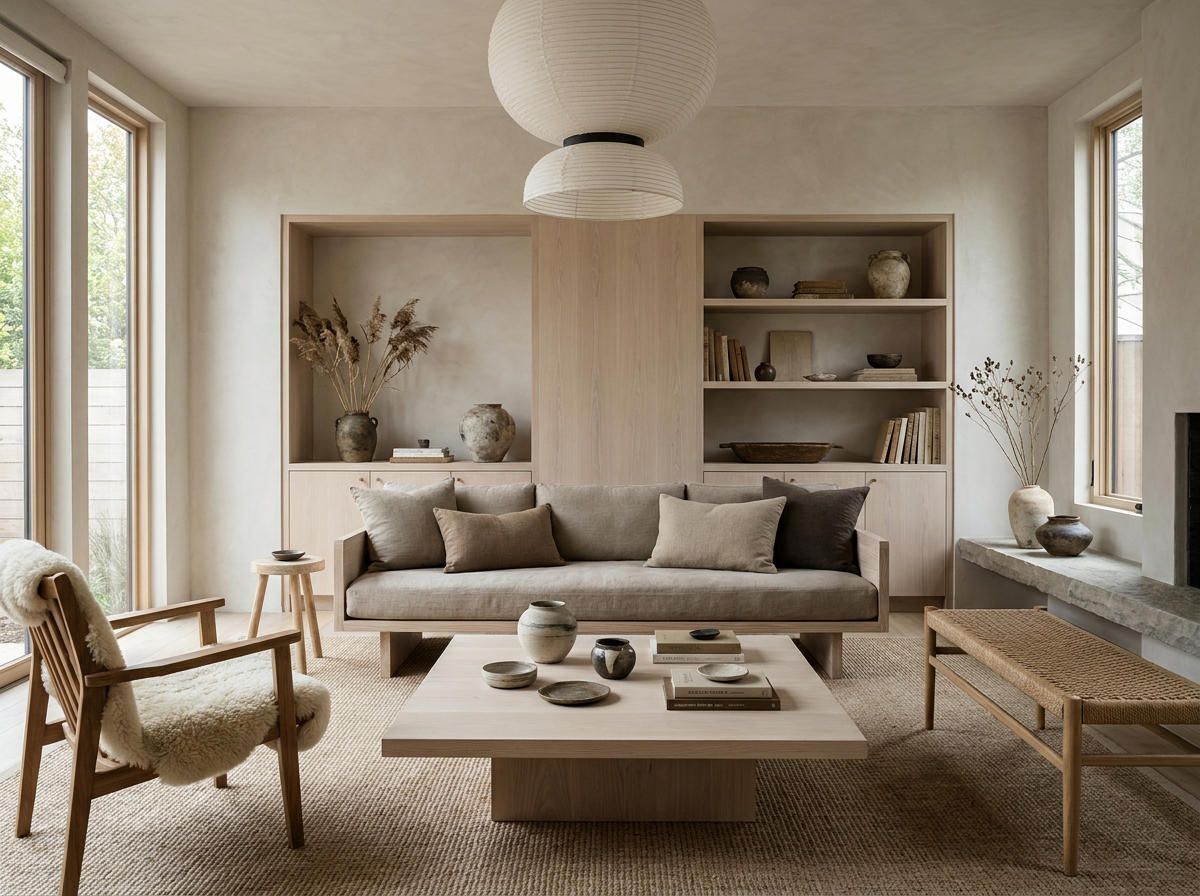
The Mindful Sanctuary living room in an Indian home

01 · Room

Living Room

Organised around a single low sofa — deep, generous, upholstered in warm linen or boucle — facing either a recessed media wall or a clear wall with a single piece of artwork. There is no coffee table clutter; a single low tray or ceramic object suffices. A slatted timber partition between the living and dining areas is the signature move in open-plan Delhi flats: visual separation and acoustic softness without closing the space.

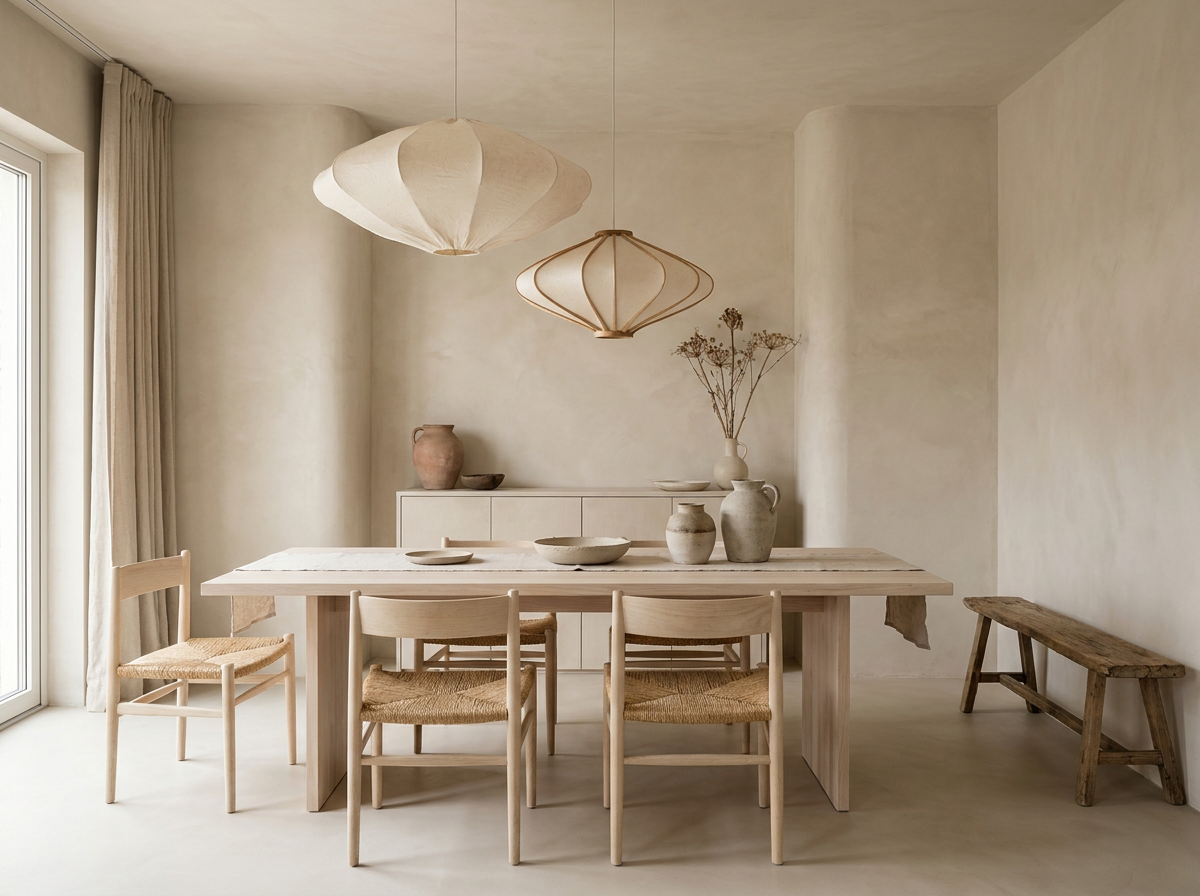
The Mindful Sanctuary dining room in an Indian home

02 · Room

Dining Room

A round or oval dining table in pale oak or matte concrete. Chairs upholstered in warm natural fabric, not timber seats. Overhead, a simple woven or ceramic pendant at a considered height — low enough to feel intimate, high enough not to interrupt conversation. No display cabinet, no statement sideboard. A single built-in credenza in flush cabinetry handles storage invisibly.

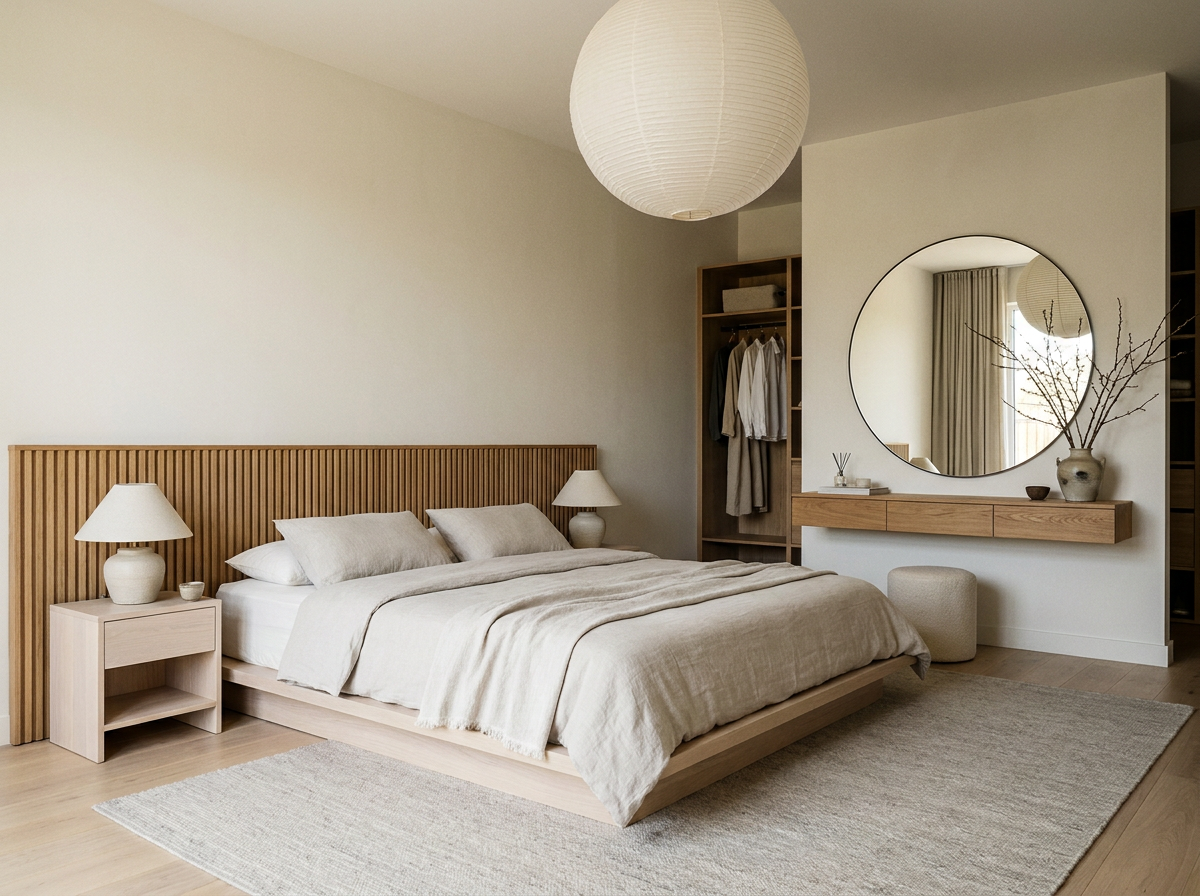
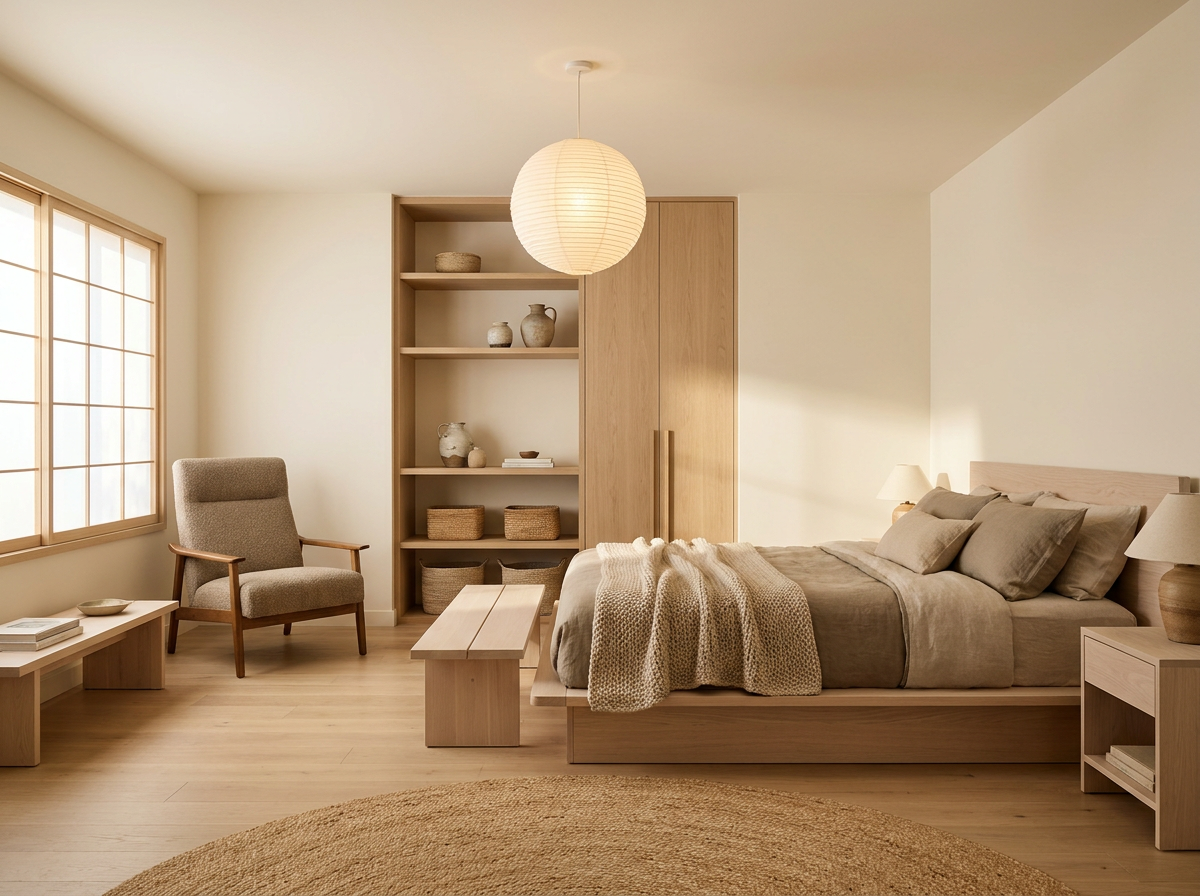
The Mindful Sanctuary master bedroom in an Indian home

03 · Room

Master Bedroom

A low platform bed in pale timber or upholstered linen. Bedding in warm white or oatmeal. No overhead light — only warm, recessed cove lighting around the ceiling perimeter and wall-mounted reading pendants. Blackout linen curtains in the same tone as the walls, so the window becomes part of the wall when closed. Every material decision is made to facilitate sleep — acoustically, visually, thermally.

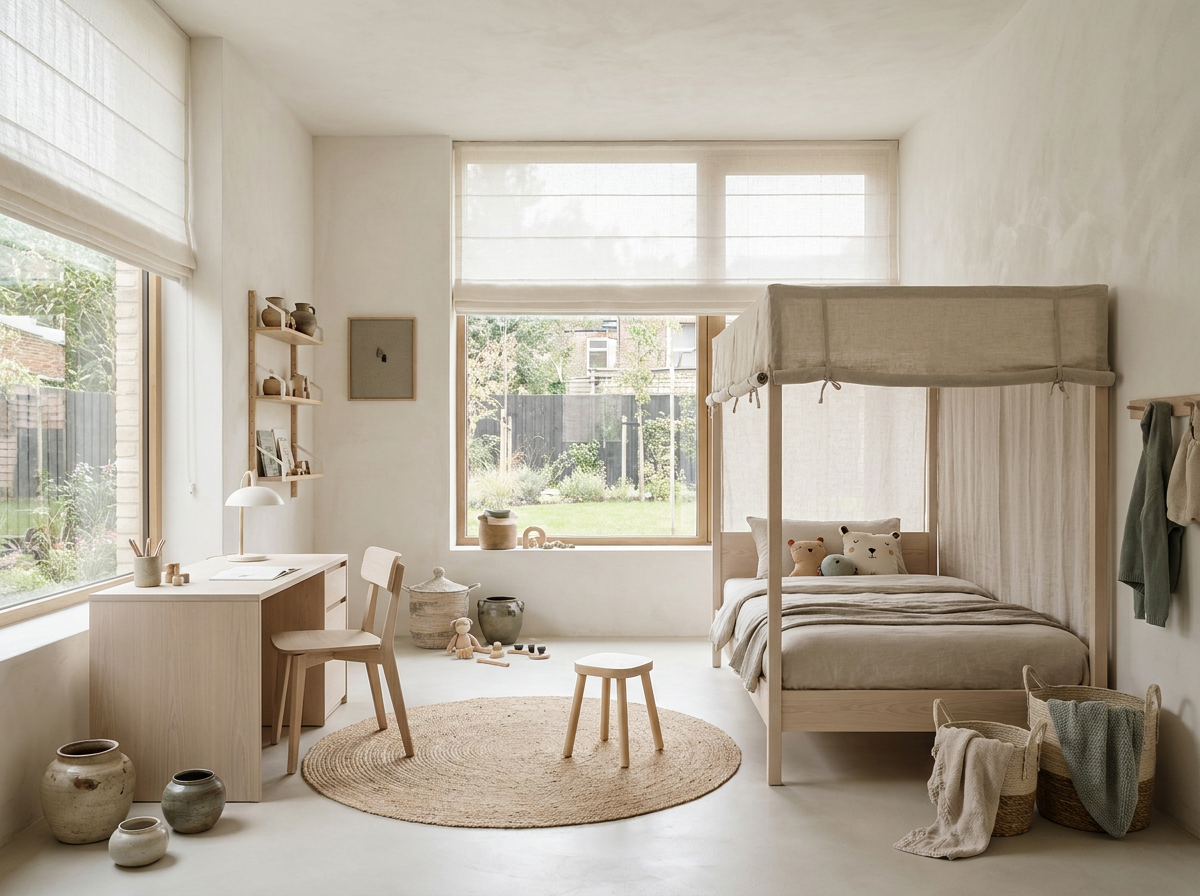
The Mindful Sanctuary kids room in an Indian home

04 · Room

Kids Room

A low mid-sleeper in pale timber. A microcement or cork floor. Built-in closed storage at child height. One accent colour — a soft terracotta cushion, a dusty blue rug — to acknowledge that this is a child's room without breaking the palette.

The Mindful Sanctuary parents room in an Indian home

05 · Room

Parents Room

The palette mirrors the master, which keeps visual continuity through the home. The furniture can be slightly darker — warm walnut against cream walls — to give the room its own character while staying within the family of materials.

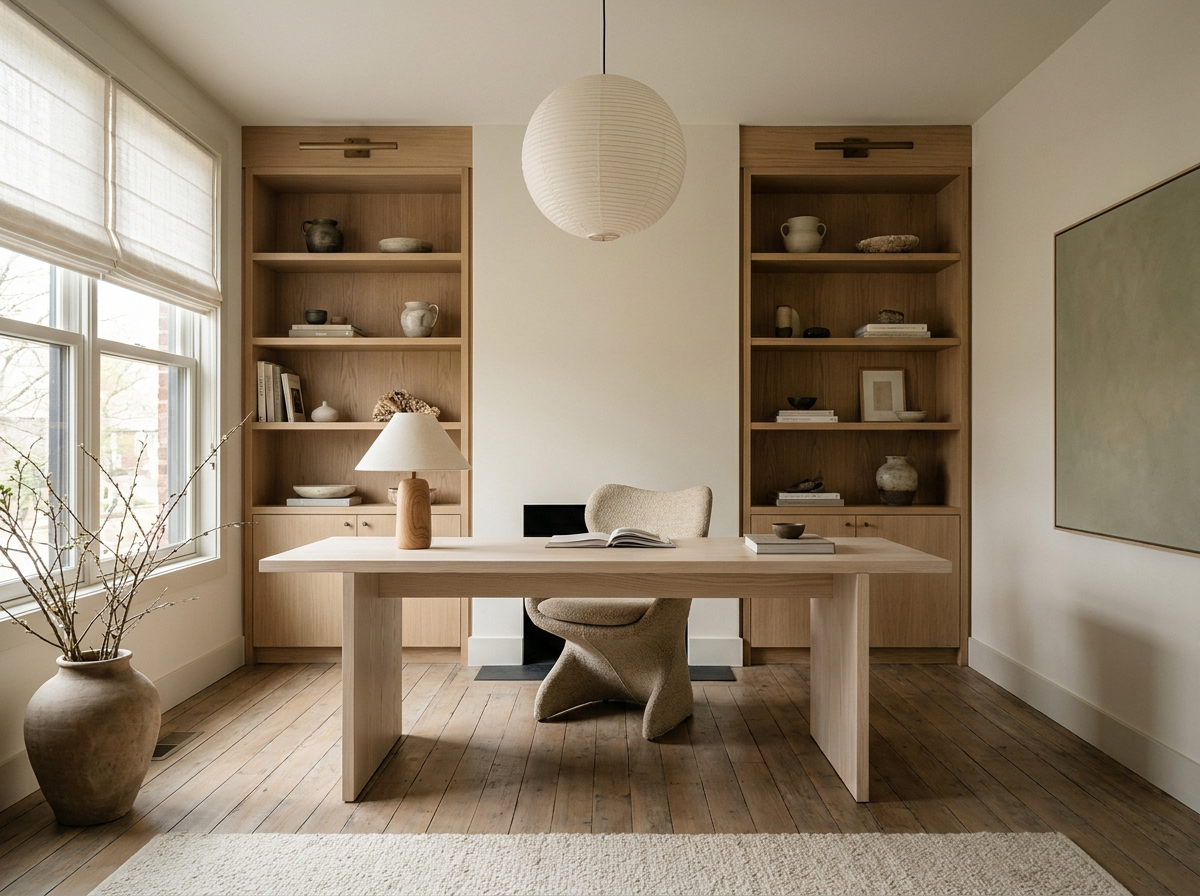
The Mindful Sanctuary study room in an Indian home

06 · Room

Study Room

A flush, handle-less desk built into an alcove or against a microcement feature wall. Open shelving limited to one wall and curated to hold only what is actively used. A single warm pendant overhead. A study that does not visually stimulate — that provides a contained, calm container for focused work — is a significant functional asset in a demanding household.

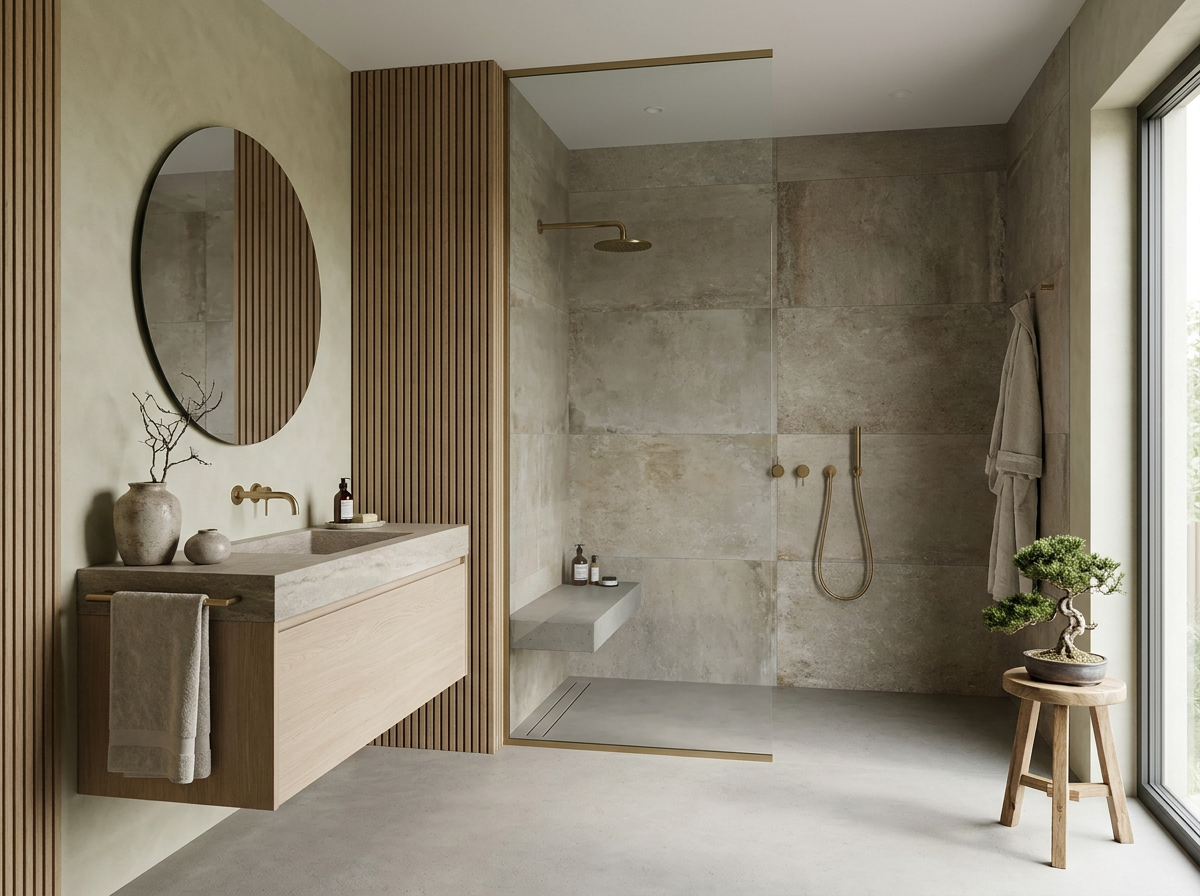
The Mindful Sanctuary wash room in an Indian home

07 · Room

Wash Room

Microcement walls and floor, seamless from floor to ceiling. A built-in vanity with an undermount basin. Brushed brass or gunmetal fixtures. No exposed pipework. A recessed niche in the shower wall for products, not a wire shelf. A small frosted or reeded glass window for natural light and privacy at once.

The Mindful Sanctuary balcony in an Indian home

08 · Room

Balcony

Natural fibre rugs, low rattan seating, ceramic pots in earth tones. One or two structural plants — a snake plant, a peace lily — rather than a crowded collection. The balcony is an extension of the interior, not a separate space with different rules.

Every space is tailored to your home, your light and how you actually live.

One way to think about your home

The Mindful Sanctuary resonates with households who want to come home to something that actively helps them decompress. If the feeling you want from your home is quiet, tactile, and considered — and if you find most interior design too visually busy — this aesthetic may put words to something you have already been thinking.

It is one of the reference points on our site, not a menu item. Your actual design direction comes from the G.R.I.N. process.

Not sure which style is yours?

The G.R.I.N. Process begins with a conversation — not a questionnaire.

We talk about how you actually use your home, what you want to feel when you walk in the door, and what has and hasn't worked in spaces you have lived in before. From there, we recommend a direction — The Mindful Sanctuary, a blend, or something else entirely.

Frequently asked

The Mindful Sanctuary, answered

Does The Mindful Sanctuary feel cold or clinical?

No — that is the common concern, and it is why the palette leans warm rather than grey-white. Clay, sand, and stone tones read as calm rather than cold. The texture of slatted timber, linen upholstery, and microcement adds warmth that bare white walls cannot.

Is microcement practical in Delhi's climate?

Yes — it is one of the most practical flooring choices for Delhi specifically. It stays cool in summer, has no grout lines to accumulate dust, and requires only a damp mop. It is sealed on installation and requires resealing approximately every five years.

Does this aesthetic work with an existing furniture set?

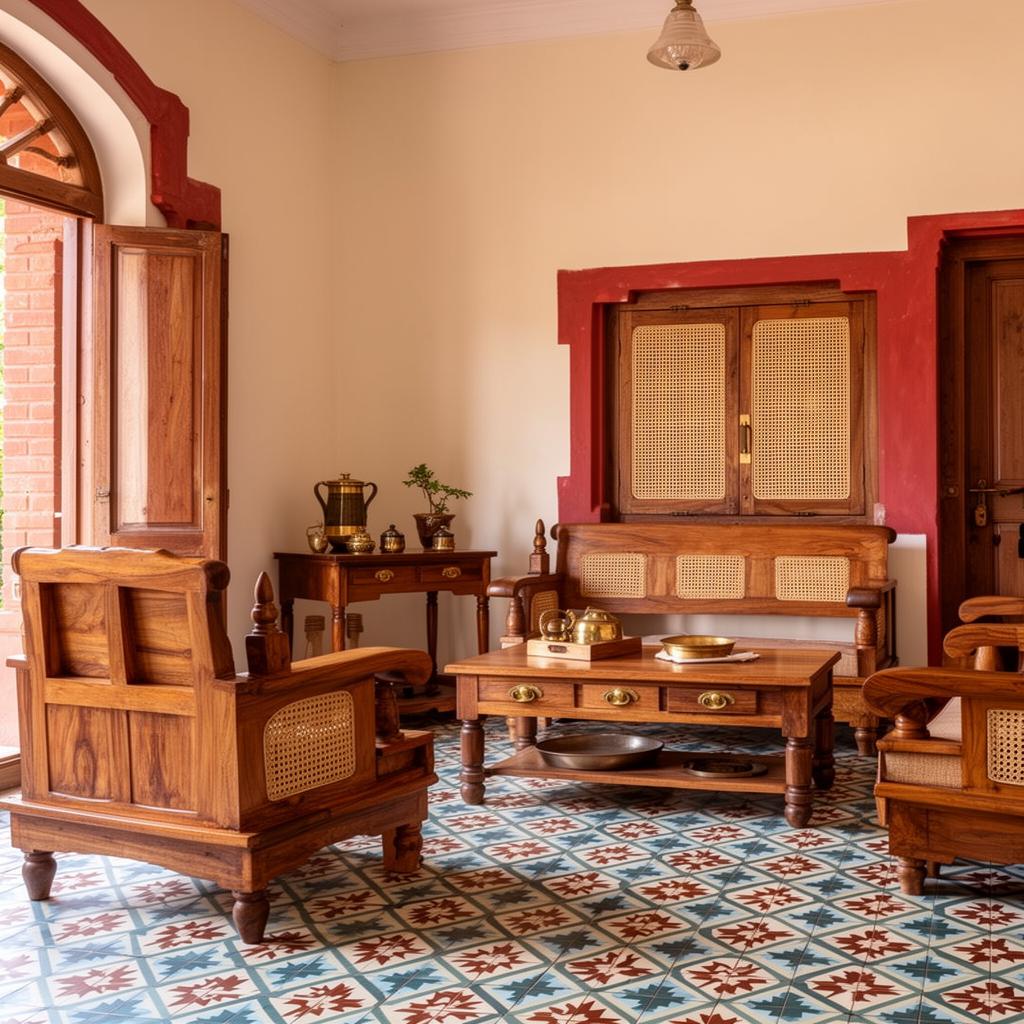
It depends on the furniture. The Mindful Sanctuary has a specific silhouette — low, rounded, natural materials. If your existing furniture is high, angular, or in dark wood, it will read as a contrast rather than a fit. The discovery call is where we assess this honestly.

How does it handle Indian storage needs?

Deliberately and generously. Built-in closed storage is central to the aesthetic — the visual quiet of the rooms depends on it. Wardrobes, kitchen cabinetry, media units, and study storage are all designed flush and handle-less from the start.

Is it suitable for a family with young children?

Yes. Microcement is durable and easy to clean. Closed storage keeps surfaces clear. The rounded furniture silhouette removes sharp corners. The muted palette hides everyday marks better than bright white. It is one of the more family-practical aesthetics on our reference list.

You may also like

Related styles

WhatsApp Call