- Colour palette
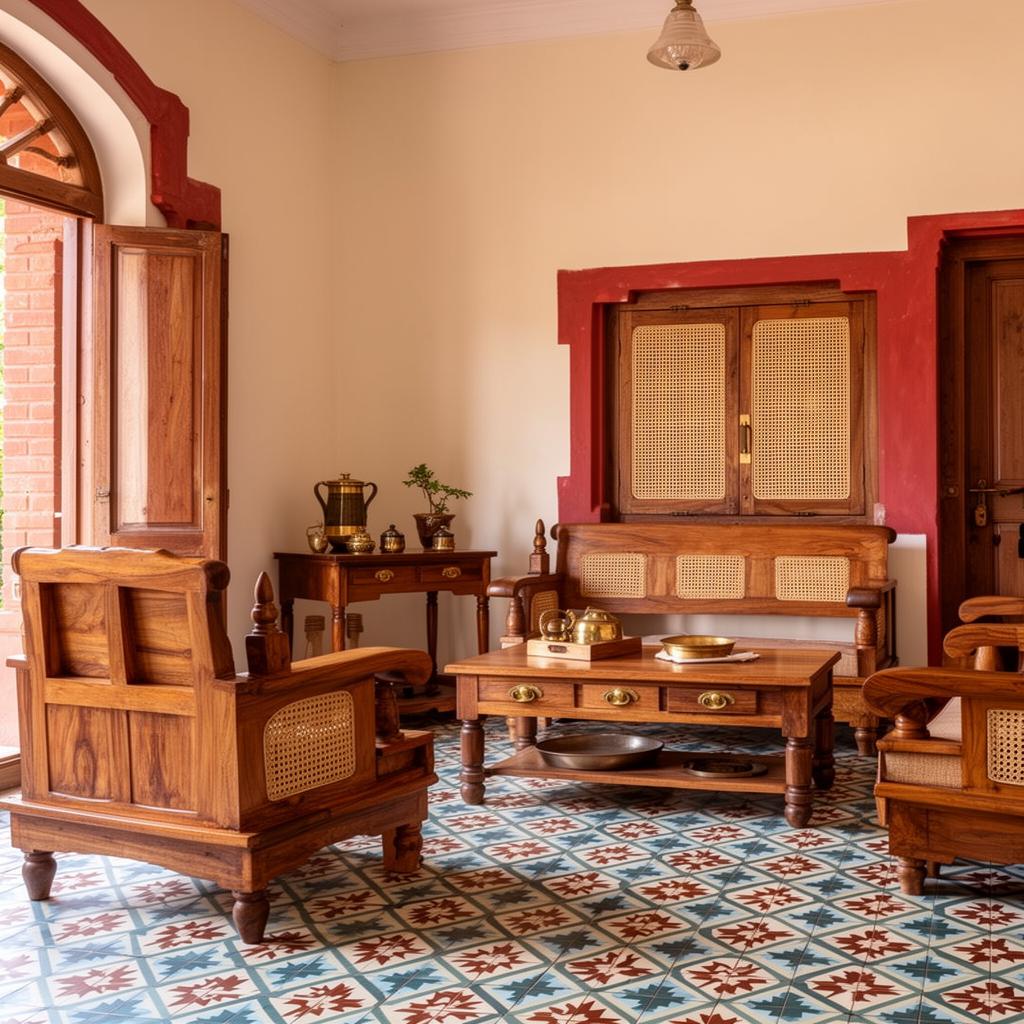
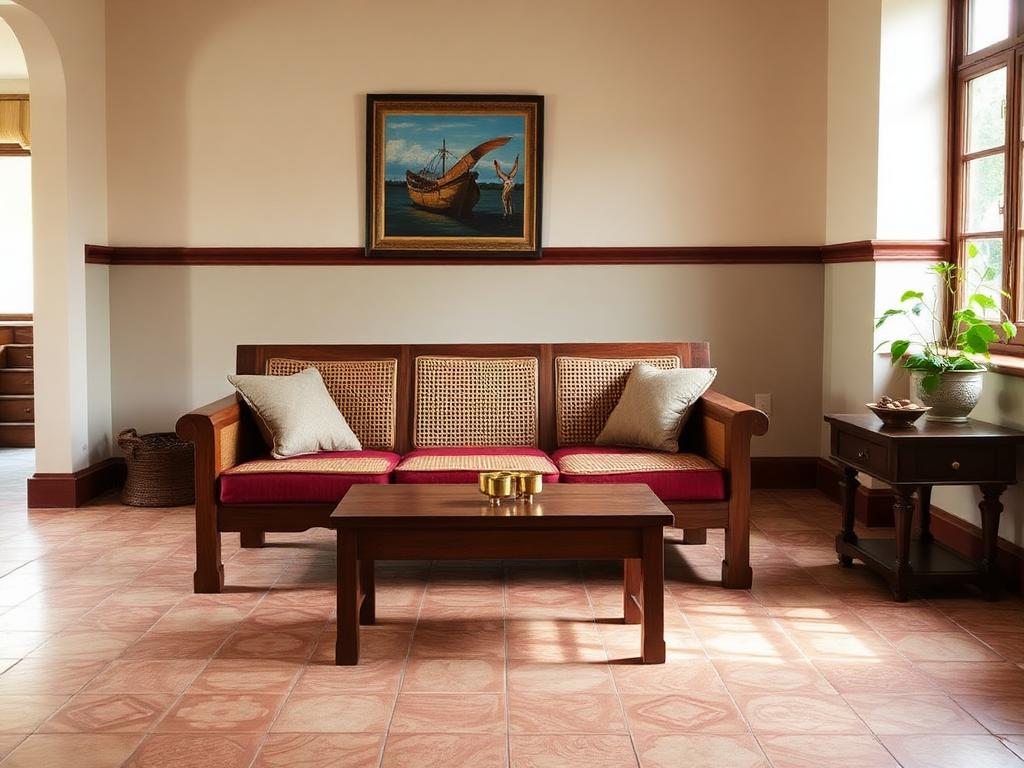
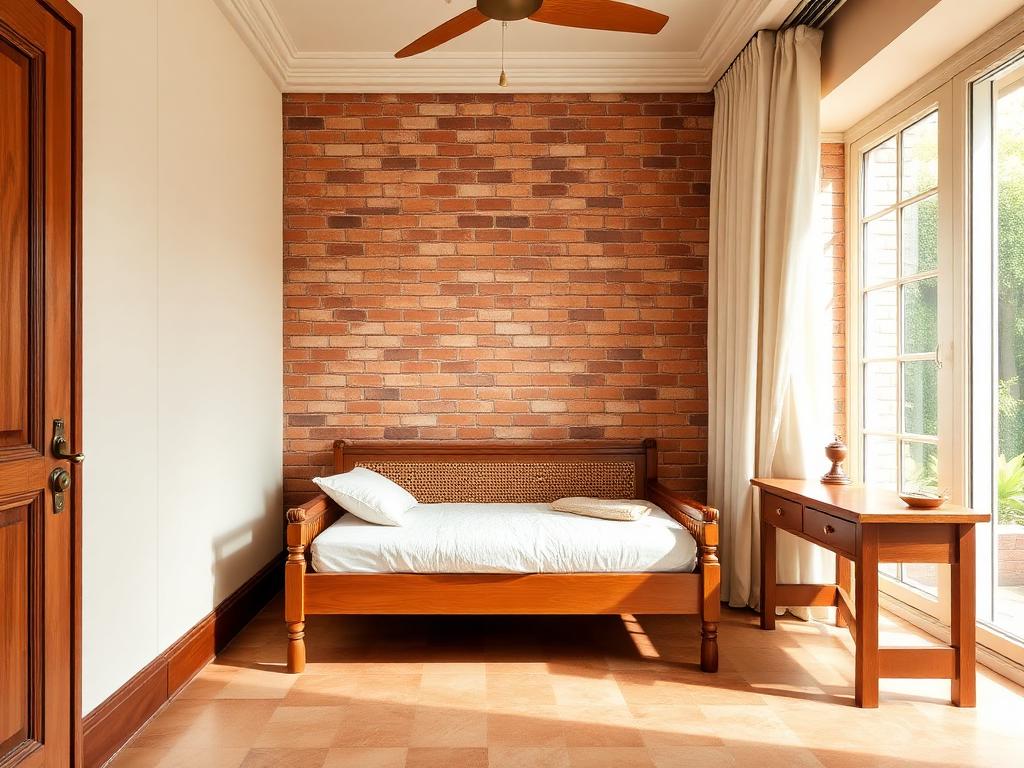
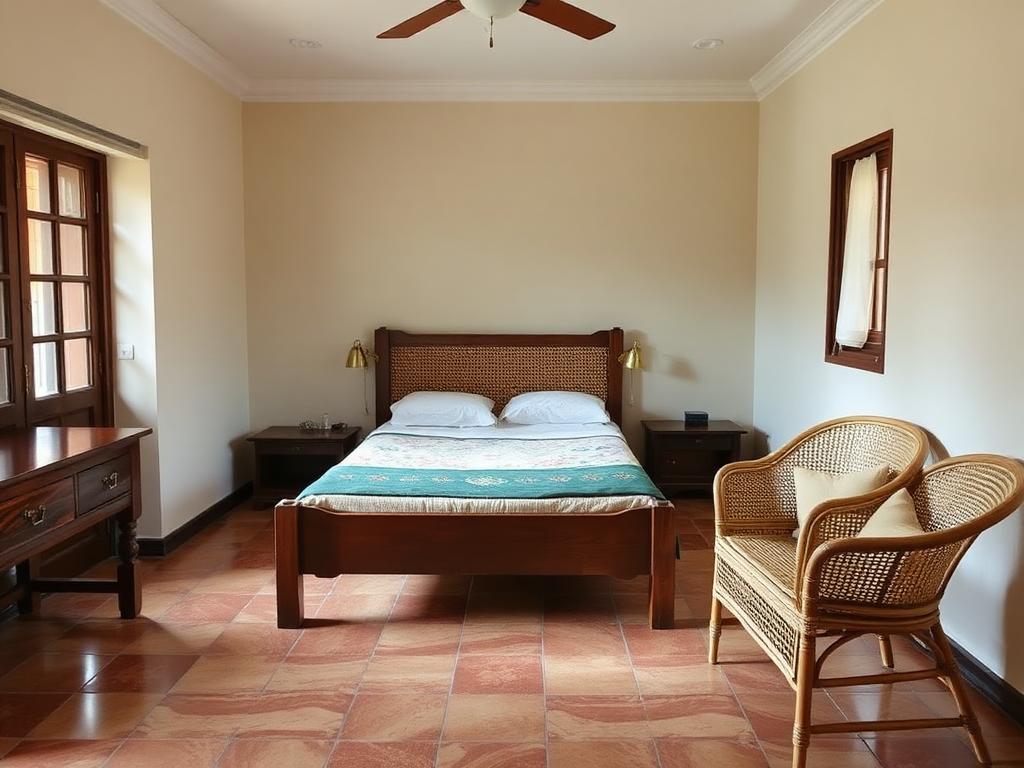
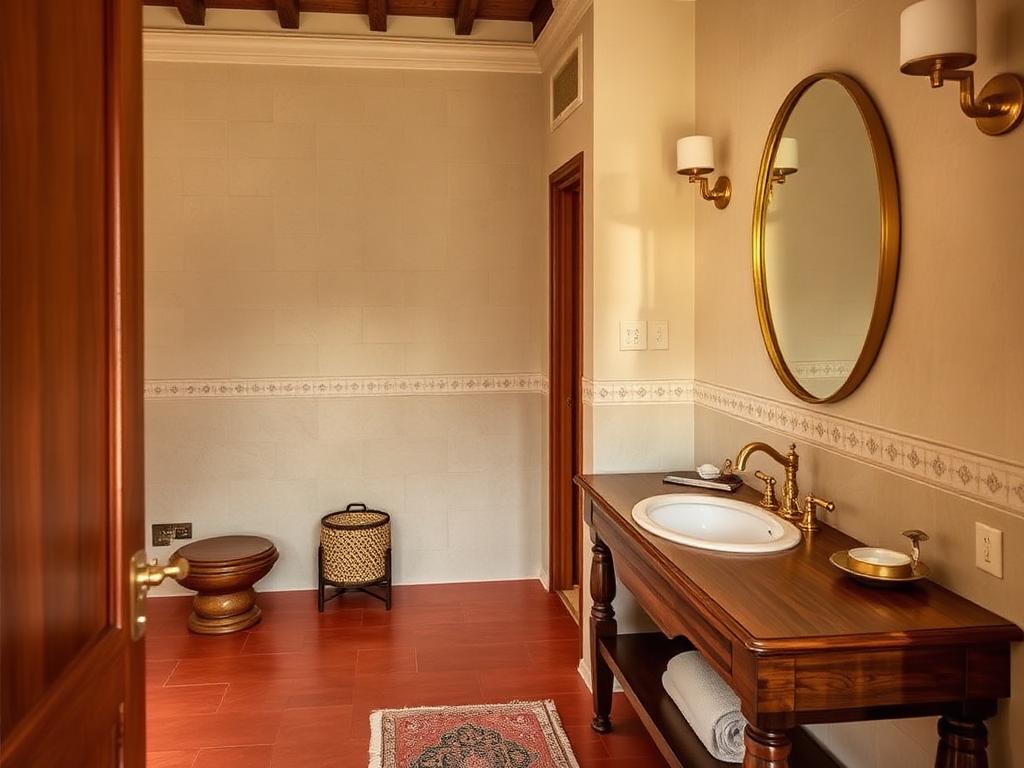
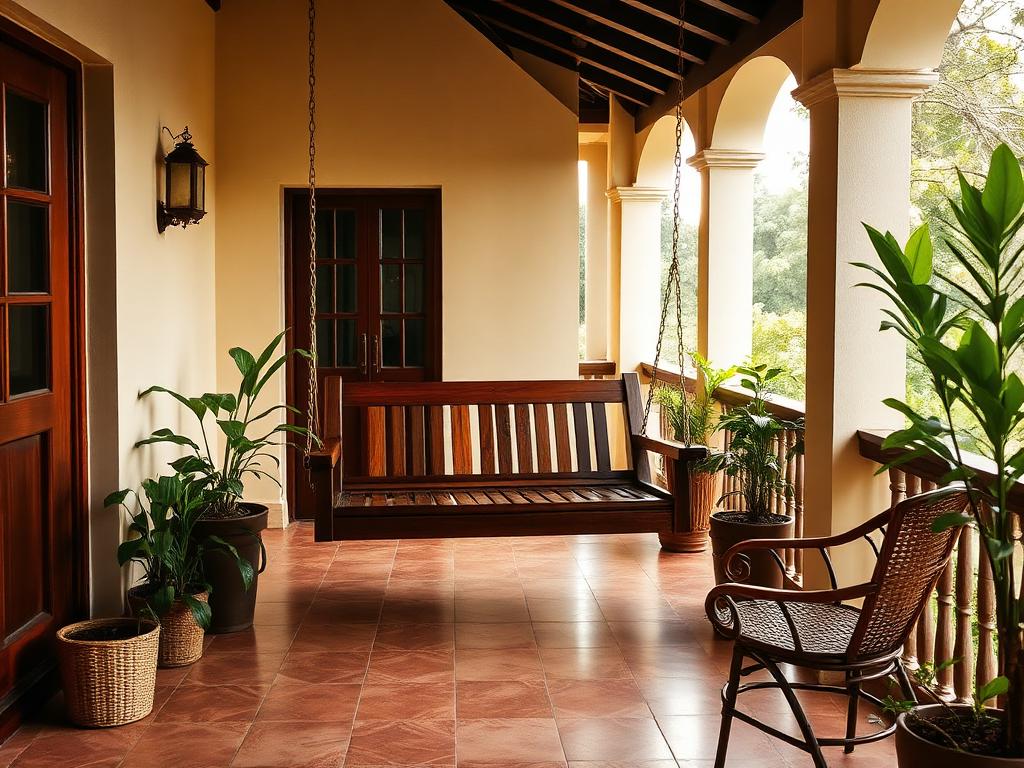
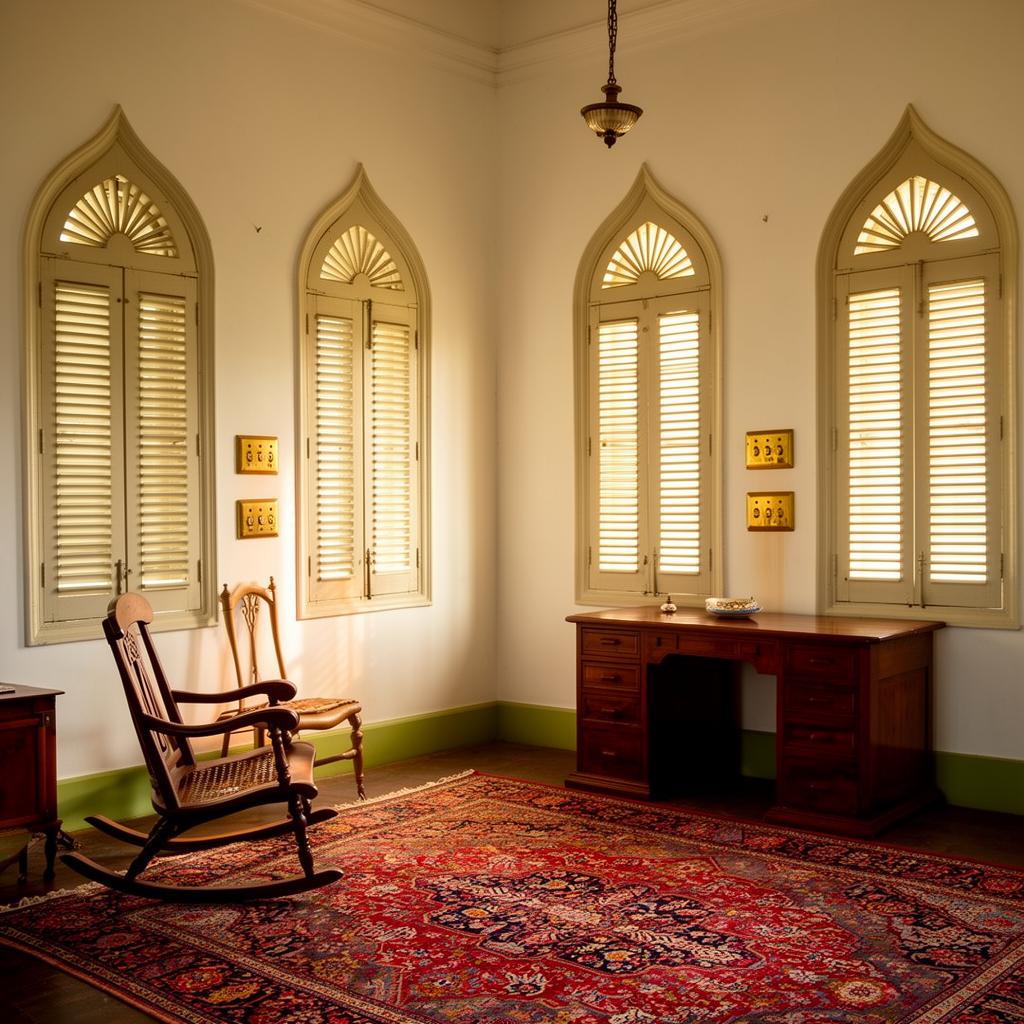
- Warm ivory and brick-red as the primary base — the palette of south Indian architecture, adapted for a Delhi interior. Warm brass as the metal accent. Deep wood tones of Burma teak as the dominant visual element. Warm and grounded without being dark.
- Materials
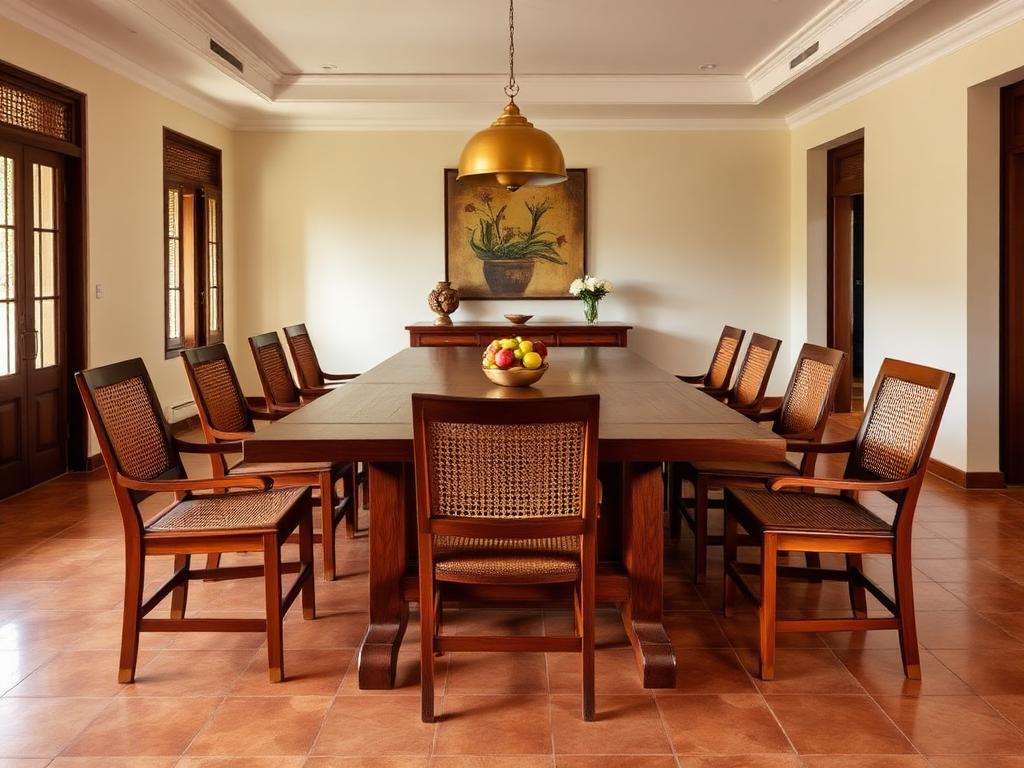
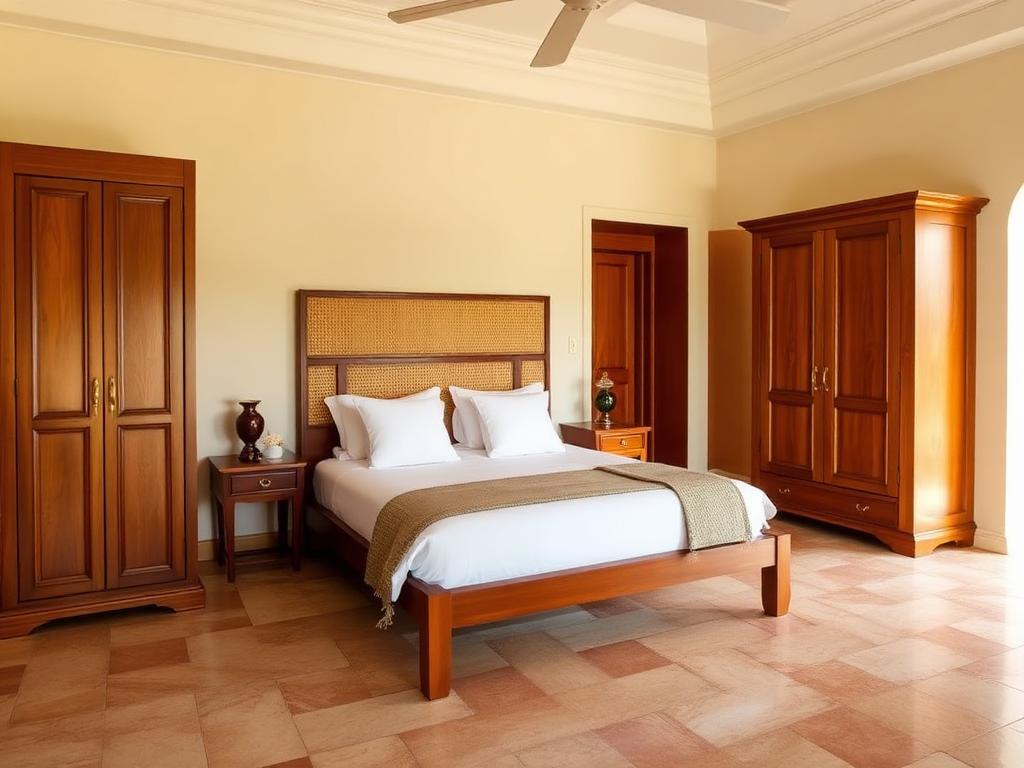
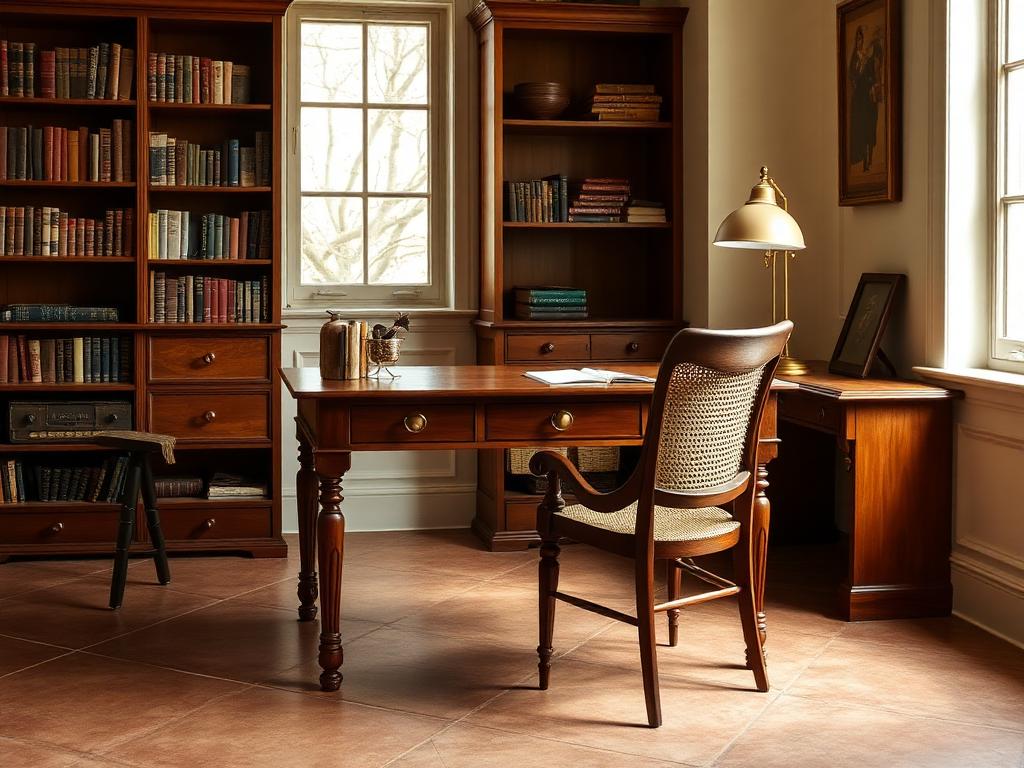
- Solid Burma teak in honest, substantial sections — not veneered, not engineered. Athangudi tile floors: the hand-poured, geometrically patterned cement tiles of Tamil Nadu, in warm terracotta, ivory, and brick-red. Oxide finishes on floors and walls. Brass cup handles and fittings on every joinery piece. Cane inserts in wardrobe and bed panels — woven tightly for durability.
- Joinery as architecture
- The joinery is the design. The wardrobe, the bed frame, the dining chairs, the shelving — these are not furniture items placed in a room, they are elements built into it. The difference in quality and visual weight between built-in teak joinery and freestanding furniture is significant and immediately apparent.
- South Indian craft vocabulary
- Athangudi tiles, oxide floors, brass cup handles, cane inserts — these are the material language of Tamil Nadu and Kerala domestic architecture, transported northward. In Delhi, they read as unusual and specific — which is part of the point.