Pixy G.R.I.N. — Great Residential Interiors Network
All styles
Rajasthani Royalty signature interior

Designed for how we live in Delhi NCR

Rajasthani Royalty

Palatial grandeur, lived-in warmth.

The havelis of Rajasthan were not museums. They were homes — loud with family, heavy with textiles, full of the particular smell of old plaster and brass. The grandeur was real, but so was the living.

Rajasthani Royalty is the design language that recovers that feeling for a contemporary Delhi home. Not a replica of a haveli. Not a costume. A home that carries the visual richness, the craft tradition, and the colour confidence of Rajasthan's architecture — adapted for how families in Delhi actually live in 2026.

A closer look

Inside the aesthetic

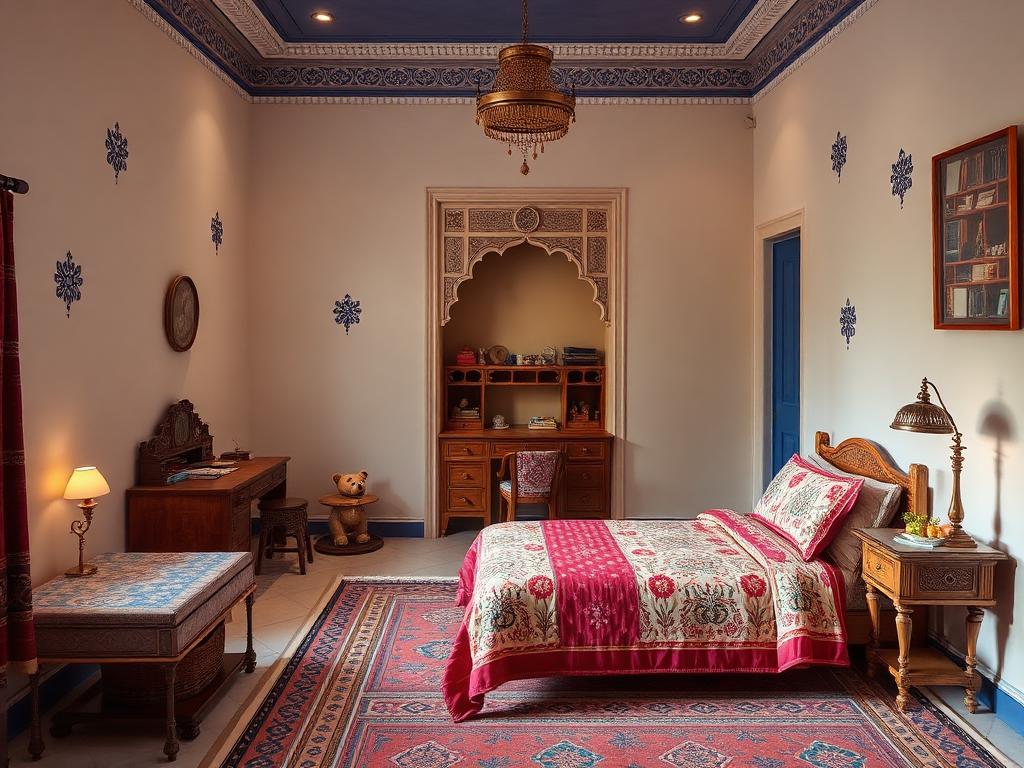
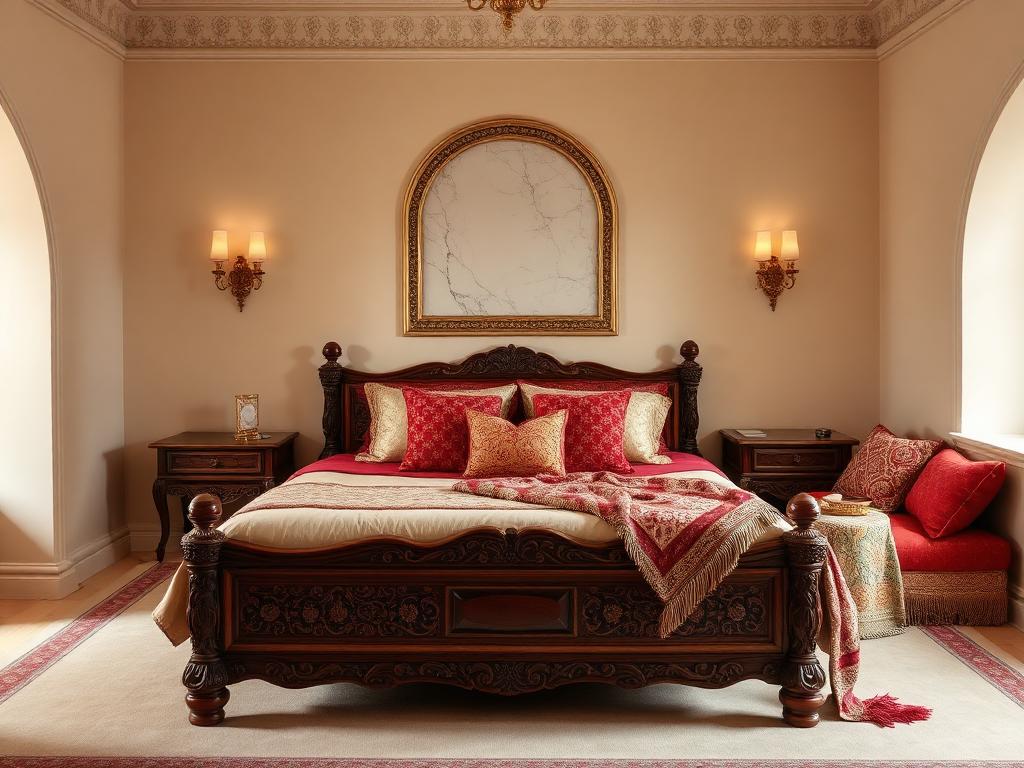
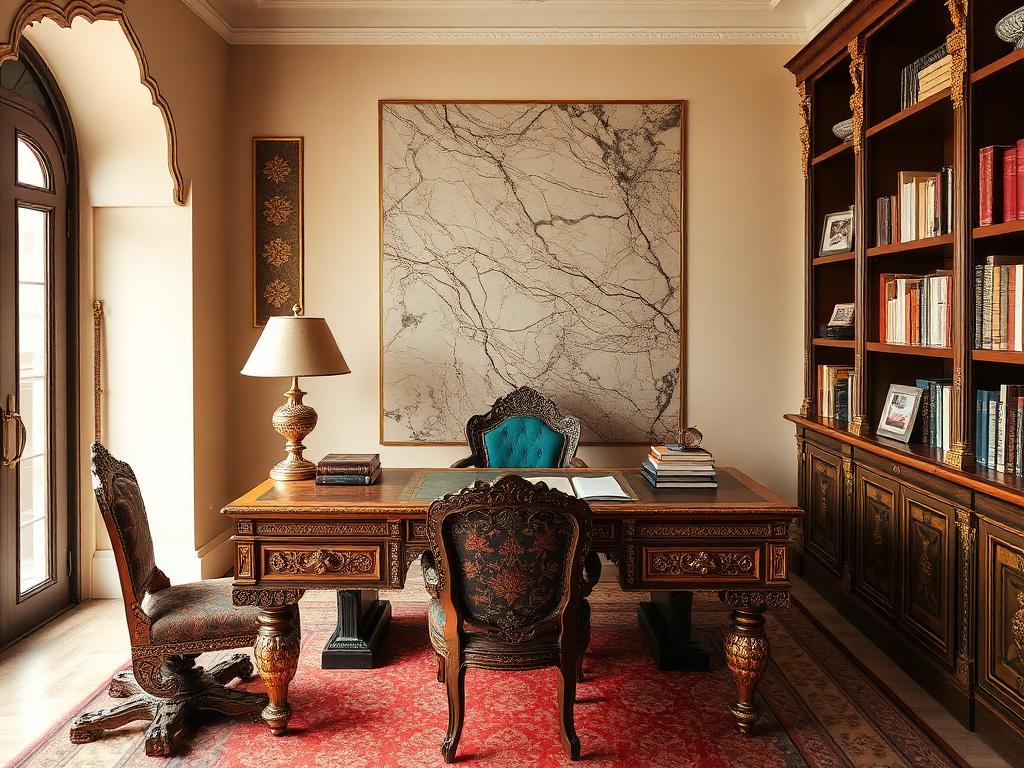
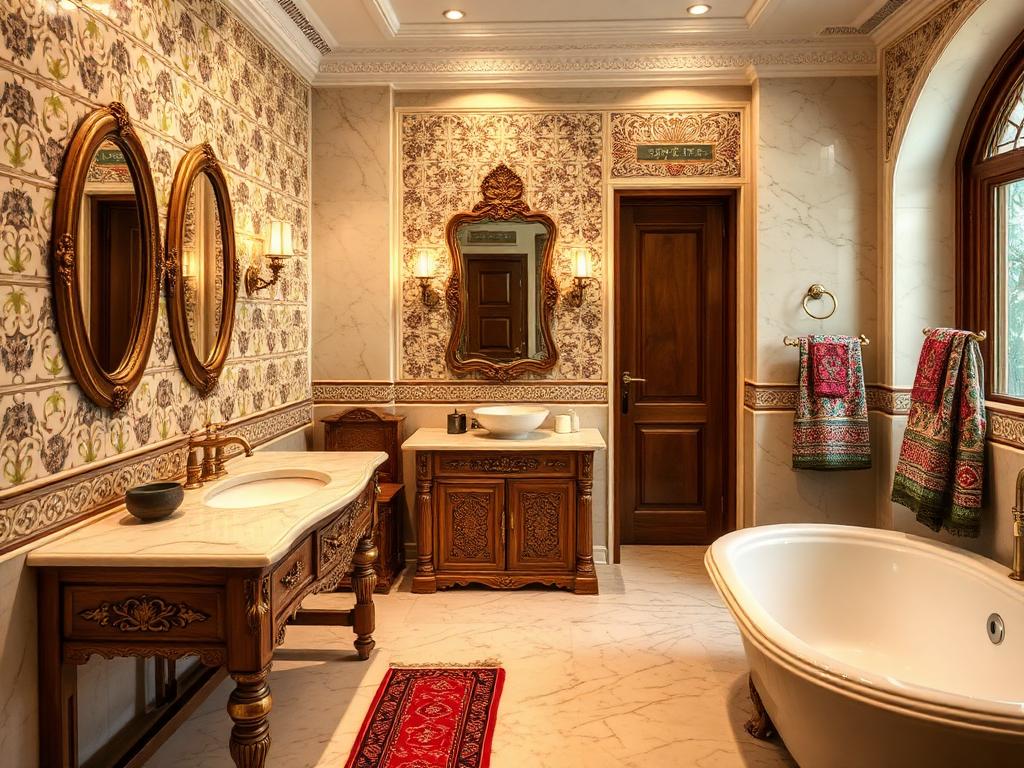
Palatial grandeur softened for daily life — the haveli reimagined, not replicated.

The vibe

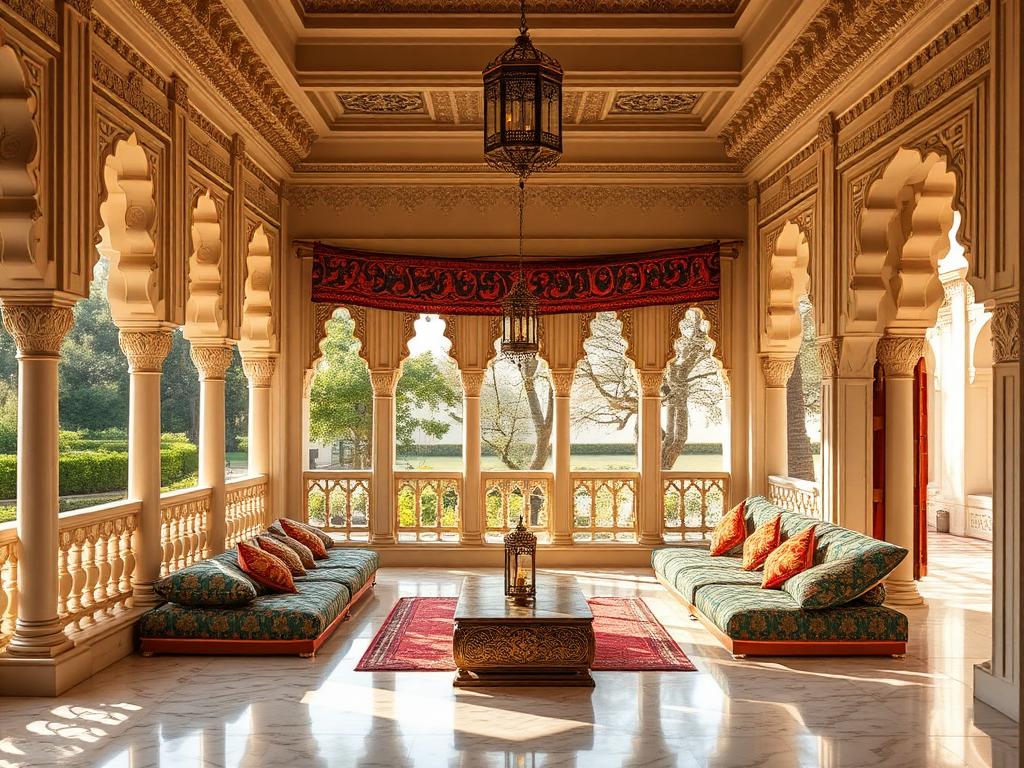
The first quality of a Rajasthani Royalty interior is richness. The colours are deep and confident: crimson, indigo, ivory, the particular warm gold of aged brass. The surfaces carry detail — carved niches, mirror work, inlay patterns — but the detail is restrained to specific moments rather than applied uniformly. The result is a home that feels significant without feeling exhausting.

The design language
Colour palette
Deep crimson, ivory, and indigo as the primary triad. Warm gold and burnt orange as secondary accents. Brass and beaten copper as metal finishes. The palette is confident — these are not dusty heritage tones, they are full-strength colours used in considered proportion.
Materials
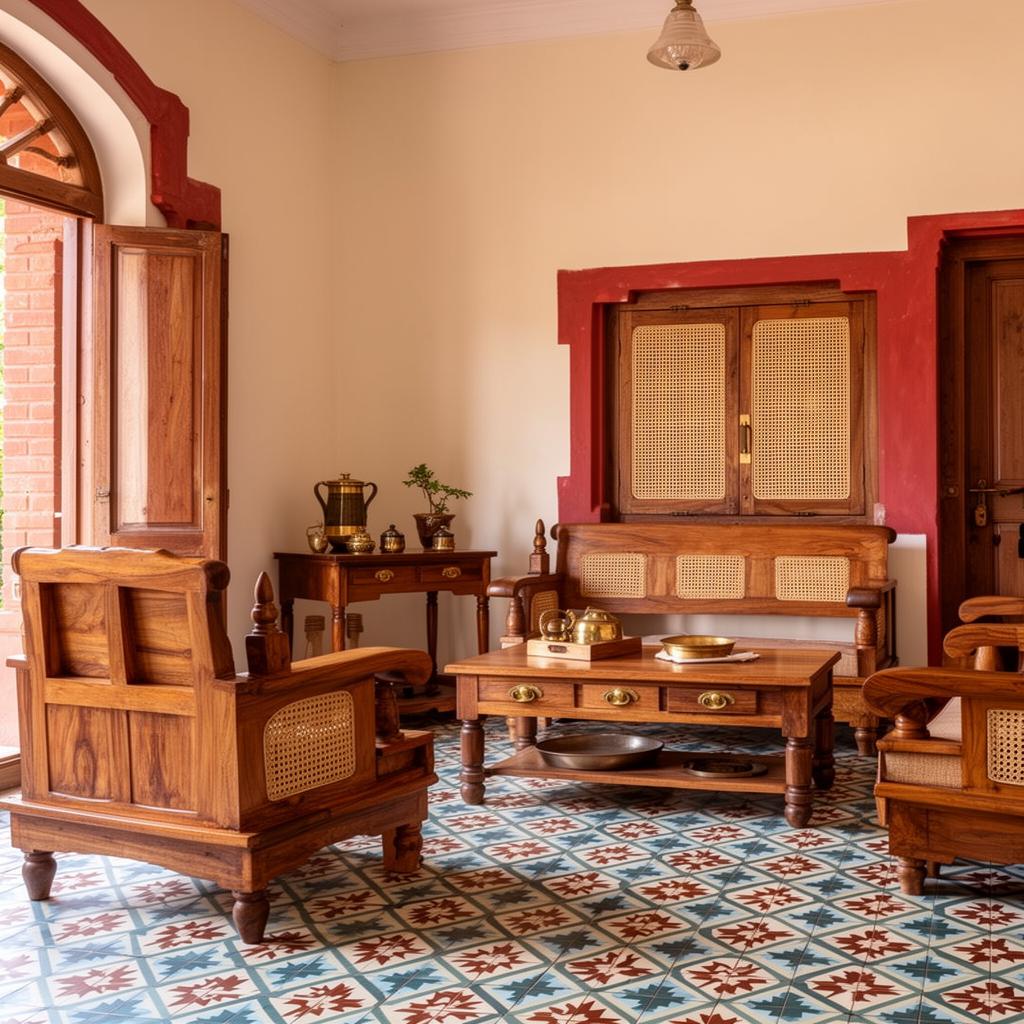
Carved jharokha-inspired niches and screens. Marble or inlay-pattern feature walls — not necessarily real marble inlay, but the pattern and visual language of pietra dura. Mirror work as a ceiling or niche detail. Hand-block printed textiles in deep tones. Brass and beaten copper in fixtures, handles, and decorative objects.
Craft as architecture
Craft is treated as a structural element, not a decorative addition. A carved timber screen is a room divider. A mirror-work ceiling panel defines a seating zone. A jharokha niche holds a lamp. The craft is doing spatial work, not sitting on a shelf.
Scale and proportion
This aesthetic works best in rooms with some scale — higher ceilings, larger floor areas. It can be adapted for standard Delhi flat proportions, but it requires discipline about which craft elements to include and at what scale.

The everyday reality

The concern with a richly decorative aesthetic is maintenance — and Rajasthani Royalty does require more attention than a minimal palette. Deep colours show dust differently: not more, but differently. Brass needs occasional polishing. Carved surfaces collect dust in their recesses.

The answer is in the application of craft elements. We use carved niches and screens at a scale and placement where they can be cleaned easily. Textile upholstery is in performance fabric with traditional surface patterns, not in delicate raw silk. Brass fixtures are lacquered for daily use. The aesthetic is rich; the maintenance is realistic.

How to recognise it
  • Deep jewel tones — crimson, indigo, or forest green — in the upholstery or on a feature wall
  • A carved or jharokha-inspired niche, screen, or panel in at least one key room
  • Brass or beaten copper in the fixtures, handles, and objects
  • Hand-block printed or hand-woven textiles throughout
  • Mirror work or inlay pattern as a ceiling or niche detail

Room-by-room

Rajasthani Royalty across every space

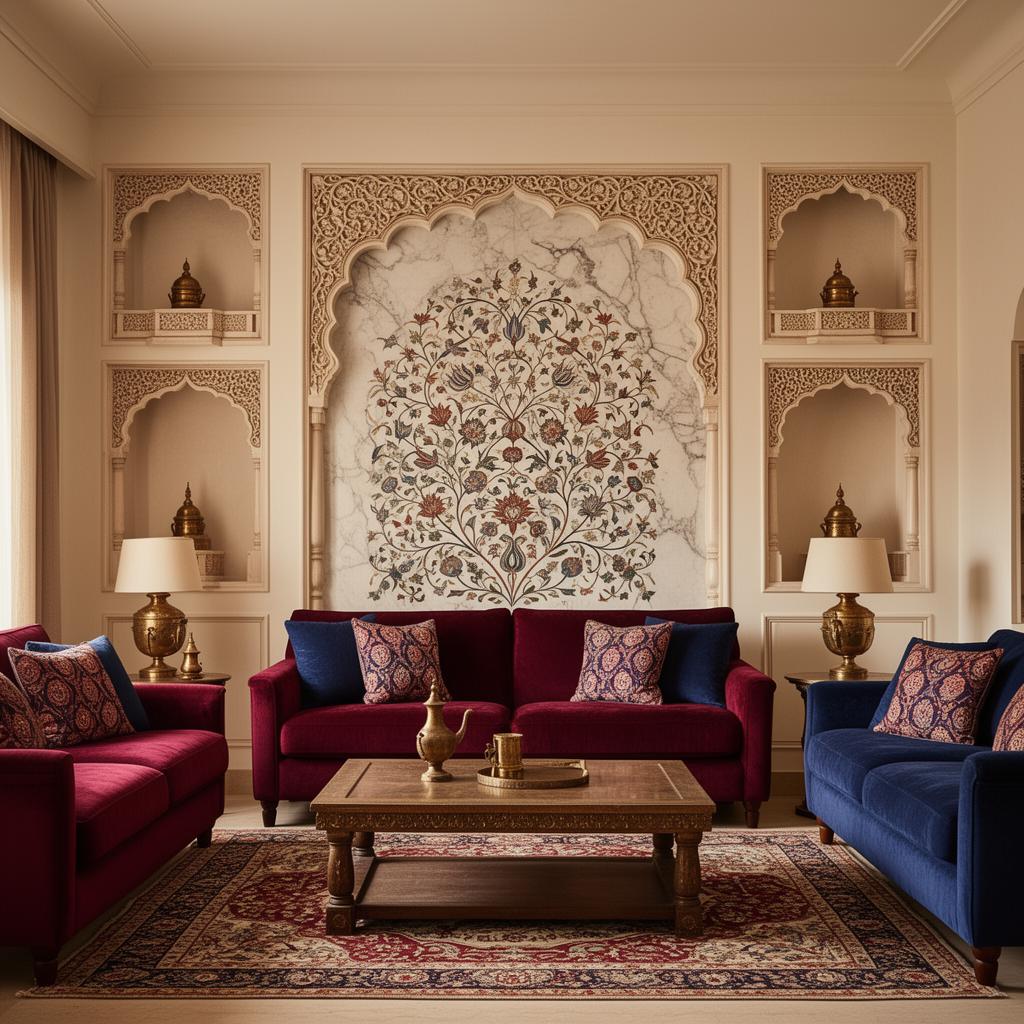
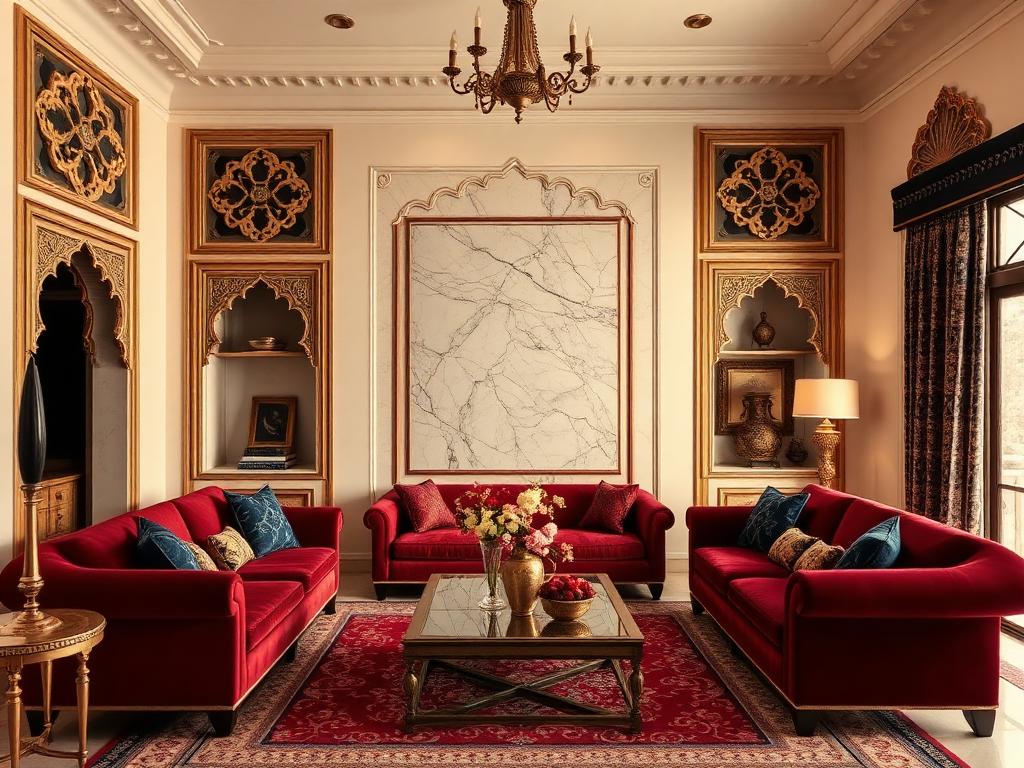
Rajasthani Royalty living room in an Indian home

01 · Room

Living Room

Anchored by a deep, jewel-toned sofa — crimson or indigo — on a stone or dark timber floor. A carved timber or metal jharokha screen divides the living area from the entrance or dining space. A hand-block printed dhurrie grounds the seating area. Brass-fitted side tables and a pair of carved niche lamps complete the palette. Walls are a warm ivory — not white, not cream, but the particular warm tone of aged plaster — which provides the backdrop against which the jewel tones read at their fullest.

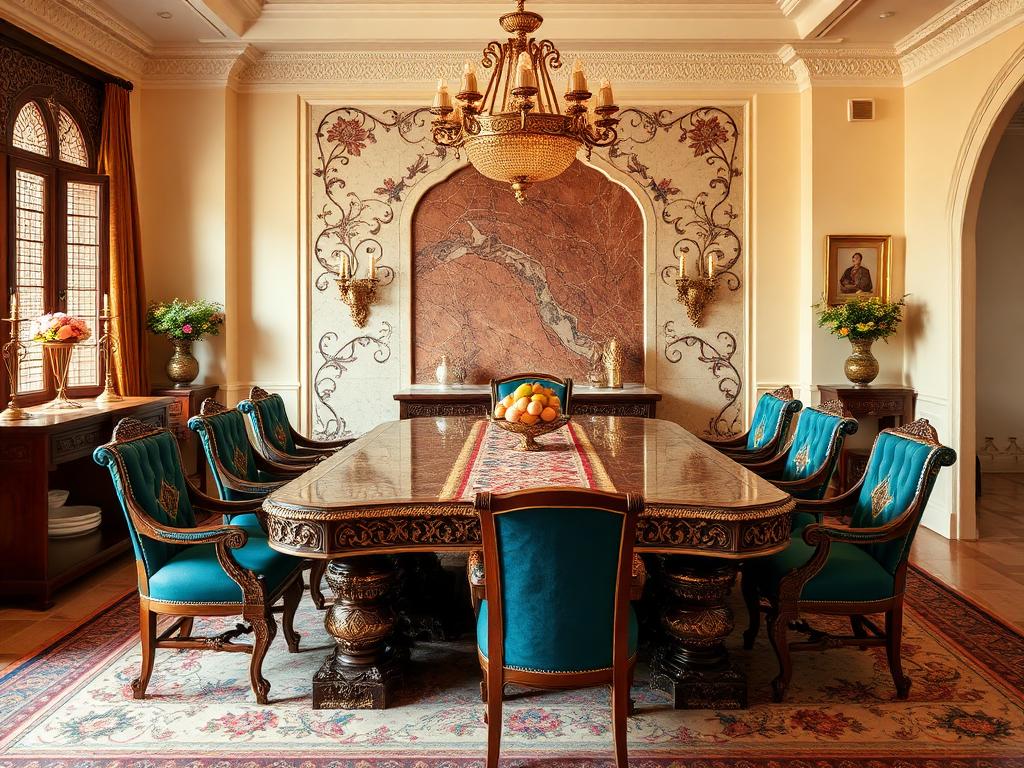
Rajasthani Royalty dining room in an Indian home

02 · Room

Dining Room

A solid timber dining table — dark rosewood or sheesham — with carved chair backs upholstered in deep ikat or hand-block print fabric. A beaten copper pendant or a cluster of brass lanterns overhead. A carved sideboard or a recessed arched niche with display shelving provides the room's secondary focal point. A room designed for occasions, even when the occasion is simply a family dinner.

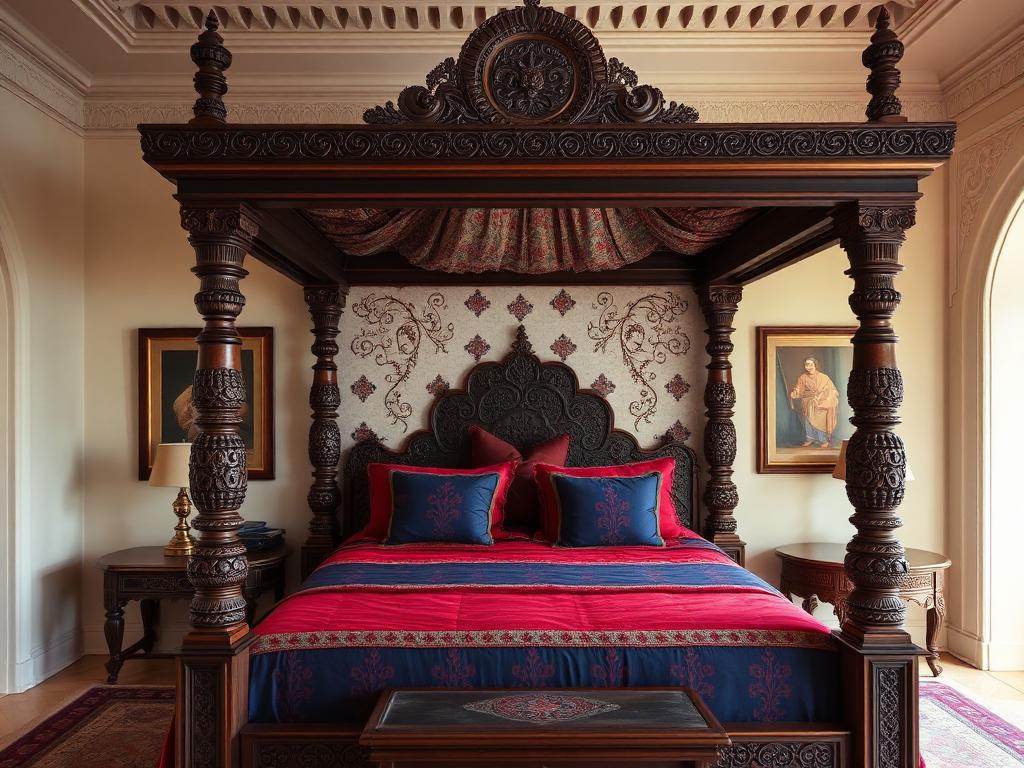
Rajasthani Royalty master bedroom in an Indian home

03 · Room

Master Bedroom

A four-poster or canopied bed frame in dark carved timber — or a contemporary interpretation with clean lines and a carved headboard panel. Bedding in deep jewel tones — indigo linen, crimson cotton — rather than the neutral palette most master bedrooms default to. Brass bedside lamps. A hand-woven rug underfoot. A room with presence rather than restraint.

Rajasthani Royalty kids room in an Indian home

04 · Room

Kids Room

The palette softens slightly — dusty rose, warm ochre, soft indigo rather than full-strength jewel tones — while keeping the craft vocabulary. A carved timber bed frame. Block-printed curtains. A small brass lamp. The room introduces children to a visual language that is distinctly Indian without being overwhelming.

Rajasthani Royalty parents room in an Indian home

05 · Room

Parents Room

Often where the aesthetic is at its most resolved. The scale of the craft elements can be increased — a carved four-poster, a larger mirror-work panel — because the household members who use this room appreciate the detail rather than find it overstimulating.

Rajasthani Royalty study room in an Indian home

06 · Room

Study Room

A dark timber desk with brass-fitted drawers. Open shelving with carved timber brackets. A deep green or burgundy leather chair. A brass desk lamp. The study draws on the visual language of the old zamindari library — the room where the family's learning and records were kept — updated for a contemporary household.

Rajasthani Royalty wash room in an Indian home

07 · Room

Wash Room

Deep emerald or navy zellige tiles on the shower wall. Aged brass or antique copper fixtures. A carved timber or brass-framed mirror. A vessel basin in hand-thrown ceramic or stone. The bathroom takes the jewel-tone palette and craft detail of the broader home in a form appropriate to a wet space — which, here, can be genuinely spectacular.

Rajasthani Royalty balcony in an Indian home

08 · Room

Balcony

Terracotta tile or red oxide flooring. A pair of carved timber chairs or a swing jhoola. Deep green plants — palms, ferns — in terracotta pots. Brass lanterns for evening light. An outdoor durbar — a space for sitting, talking, and watching the evening light change.

Every space is tailored to your home, your light and how you actually live.

One way to think about your home

Rajasthani Royalty resonates with households who want a home that is visually confident and culturally rooted — who find most contemporary Indian interiors visually bland, and who want to live surrounded by the craft traditions that India produces at its finest.

It is one of the reference points on our site, not a menu item. Your design direction comes from the G.R.I.N. process.

Not sure which style is yours?

The G.R.I.N. Process begins with a conversation — not a questionnaire.

We talk about how you actually use your home, what you want to feel when you walk in the door, and what has and hasn't worked in spaces you have lived in before. From there, we recommend a direction — Rajasthani Royalty, a blend, or something else entirely.

Frequently asked

Rajasthani Royalty, answered

Does Rajasthani Royalty work in a modern flat, or does it need a bungalow?

It works in flats — with appropriate calibration. The scale of craft elements is adjusted to the room's proportions. A smaller flat might have one significant jharokha-inspired screen and a jewel-tone palette, where a larger home might carry carved ceilings and full mirror-work panels. The vocabulary is the same; the scale adapts.

Is this aesthetic very high maintenance?

More than a minimal palette, less than most people assume. Brass fixtures are lacquered for daily use. Carved surfaces are sealed against dust. Textile upholstery is in performance fabric. The aesthetic is rich; the maintenance specification is realistic.

Can it be combined with more contemporary elements?

Yes — Modern Heirloom sits adjacent to Rajasthani Royalty and is essentially the version where the contemporary and traditional elements are more equally weighted. The discovery call explores where on that spectrum your home should sit.

Is the jewel-tone palette suitable for Delhi's natural light conditions?

Delhi's strong summer light handles deep jewel tones better than the softer light of coastal cities. The colours read at full strength rather than washing out. North-facing rooms with less light may need the palette lightened slightly — this is part of the material recommendation process.

Where do the craft elements come from?

Our partner network includes artisan sourcing from Rajasthan, Gujarat, and across north India. We specify and source; you do not need to travel or manage procurement relationships.

You may also like

Related styles

WhatsApp Call